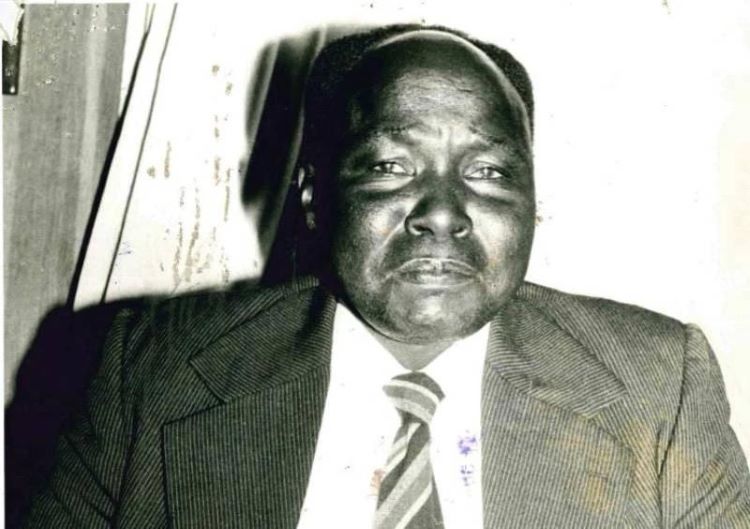
Hon. Francis Polisi Loile Lotodo was one of the most influential leaders to emerge from West Pokot and a strong voice in Kenya’s political landscape. His fearless style, firm conviction, and deep commitment to pastoralist communities made him a defining figure in national politics for decades.
He was born and raised in West Pokot, where he grew up among pastoralist families. The harsh realities of life in semi arid areas shaped his worldview and inspired his lifelong campaign for security, development, and recognition of marginalized groups. These early influences became central to his political mission.
Rise in National Politics
Lotodo entered Parliament in 1969 after winning the Pokot Constituency seat at a time when Kenya was going through major political shifts. He retained his position in 1974, 1979, 1983, and 1988, establishing himself as one of the most consistent leaders from the region. When the government later divided the constituency and created Pokot West in 1988, he became its first Member of Parliament. His outspoken nature and firm stand on issues quickly earned him national attention.
Detention
His career suffered a major blow in 1990 when he was arrested and detained during a period of political pressure and uncertainty. The detention cost him his parliamentary seat and marked one of the most challenging chapters in his life. However, he refused to retreat from public service. In the first multiparty elections of 1992, he made a remarkable comeback by winning the Kapenguria Constituency seat, which he held until 1997. During this time, he continued to champion better resource distribution, improved security, and greater attention to the needs of pastoralist populations.
Return to Parliament
Lotodo’s influence earned him several Cabinet appointments. He served as Minister for Home Affairs and Heritage in 1993, later moved to the Ministry of Local Government in 1997, and was appointed Minister for Environment and Natural Resources in 1999. His work in these ministries strengthened policies that affected rural development, natural resource management, and energy supply, including efforts that supported electrification in remote areas.
Despite his achievements, Lotodo often attracted controversy. He held strong conservative views and defended traditions that some critics saw as outdated. His support for the controversial Karura Forest land allocation triggered national debate and highlighted his readiness to take firm stands regardless of public pressure. His health began to decline in the late 1990s due to oesophageal cancer, yet he continued to serve in Parliament with determination. He died in November 2000 in South Africa while undergoing treatment.
Legacy
His legacy lives on as a courageous leader, a defender of pastoralist communities, and a political pioneer whose influence still shapes West Pokot and Kenya at large.
Also read: By-Elections Shape Kenya’s Journey to 2027