
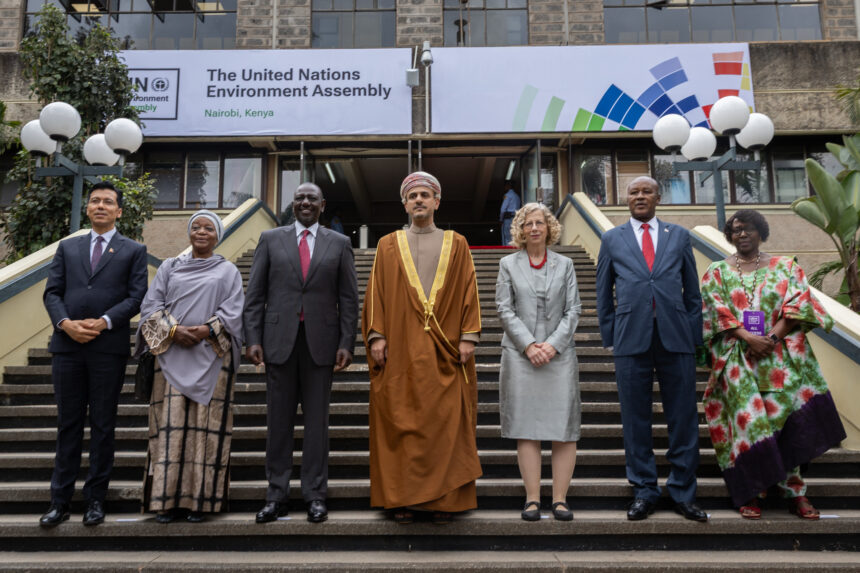
Kenya continues to shape global environmental policy through its active participation in the United Nations Environment Assembly (UNEA). Hosted under the United Nations Environment Programme (UNEP), the Assembly remains the world’s highest decision making body on environmental matters. Its outcomes influence international cooperation, national policies, and future legal frameworks.
At the seventh session of UNEA, member states submitted about 15 draft resolutions for consideration. After a week of negotiations, the Assembly adopted 11 resolutions. In addition, delegates approved three formal decisions and one ministerial declaration. Kenya supported three of the resolutions that were adopted, reinforcing its role as a key contributor to multilateral environmental dialogue.
Resolutions at UNEA follow a structured process. Member states prepare draft proposals in response to calls issued by the UNEA Bureau and UNEP. These drafts circulate ahead of the Assembly to allow consultations and negotiations. During the session, countries debate the proposals, suggest amendments, and seek consensus. Time allocation plays a major role in determining which drafts advance to adoption.
Not all proposals succeed. At UNEA-7, several drafts failed to pass due to limited time for discussion. One such proposal came from Peru and received Kenya’s backing. The draft aimed to enhance the international response to crimes that affect the environment. Despite its relevance, the Assembly did not adopt it. Kenya also supported a proposal from Mexico that sought to strengthen UNEP’s role in Nairobi and improve multilateral cooperation. That proposal also fell short.
Multilateral Negotiations
Kenya’s leadership acknowledged both achievements and constraints. Environment, Climate Change and Forestry Cabinet Secretary Deborah Barasa described the session as a strong example of multilateral cooperation. She said the discussions helped align public policies related to the environment and created pathways for positive global outcomes.
However, Ms Barasa also highlighted procedural challenges. She noted that insufficient time limited meaningful exchanges on several draft resolutions. Despite this, she emphasised that the failure to adopt some drafts did not reduce their importance. She expressed confidence that, with more time, additional proposals would have been approved.
She urged the Assembly to keep discussions open and allow proponents to reintroduce unresolved drafts at future sessions, including UNEA-8. This approach reflects the Assembly’s iterative nature, where ideas evolve across sessions rather than ending with a single vote.
From Global Resolutions to National Action
After adoption, attention shifts to implementation. Ms Linda Kosgei, Director of Multilateral Environment Agreements at the Ministry of Environment, Climate Change and Forestry, explained that countries usually unpack resolutions to guide national action. She clarified that Kenya does not need to amend its laws to implement the adopted resolutions.
According to Ms Kosgei, the intentions of the UNEA resolutions align with Kenya’s Constitution, Vision 2030, and existing environmental laws. This alignment allows the country to integrate international commitments without disrupting domestic legal frameworks. It also ensures continuity between global objectives and national development priorities.
The Assembly also addressed emerging issues, including artificial intelligence. Ms Kosgei said many countries hesitate to engage with AI because it is new and advancing rapidly. Limited capacity and uncertainty often slow policy responses. However, she argued that this reality makes early engagement more urgent.
She explained that AI offers significant potential for tackling environmental challenges. These include data analysis, monitoring ecosystems, and improving decision-making. Kenya supports addressing AI early to harness its benefits while shaping responsible governance frameworks.
Although UNEA resolutions are not legally binding, officials stress their importance. Ms Kosgei noted that resolutions express a country’s political commitment on the global stage. They signal intent and direction, even without immediate legal force.
Such commitments often shape future agreements. Over time, repeated discussions and affirmations through resolutions can lead states to formalise issues they consider mature and widely supported. This process can result in legally binding instruments, including international treaties.
Kenya’s consistent engagement at UNEA reflects a long-term strategy. By supporting resolutions, contributing to debates, and advocating for continued dialogue, the country strengthens its influence in global environmental governance. It also reinforces Nairobi’s position as a hub for international environmental cooperation.
Through patience, persistence, and collaboration, Kenya demonstrates how sustained participation in multilateral institutions helps shape global responses to environmental challenges that transcend borders and generations.
Also read: Talanta Stadium and Ruto’s Strategic Move