Exploiting Public Health Systems
Healthcare remains a public good that demands accountability. In Kenya, hospitals protect lives and deliver essential services. Investigations reveal that some facilities exploit the system for profit. They claim payments for treatments they never provide, register ghost patients, and create false records. These actions drain public funds and endanger patients.
Public health schemes such as the Social Health Authority (SHA) and the former National Health Insurance Fund (NHIF) aim to expand access to care. Fraud persists because authorities fail to monitor and verify activities effectively. Some hospitals submit claims for surgeries they never perform. Others inflate tests or change simple outpatient visits into costly inpatient procedures. Staff and management sometimes collude to commit these abuses.
Cases of Fraud and Systemic Abuse
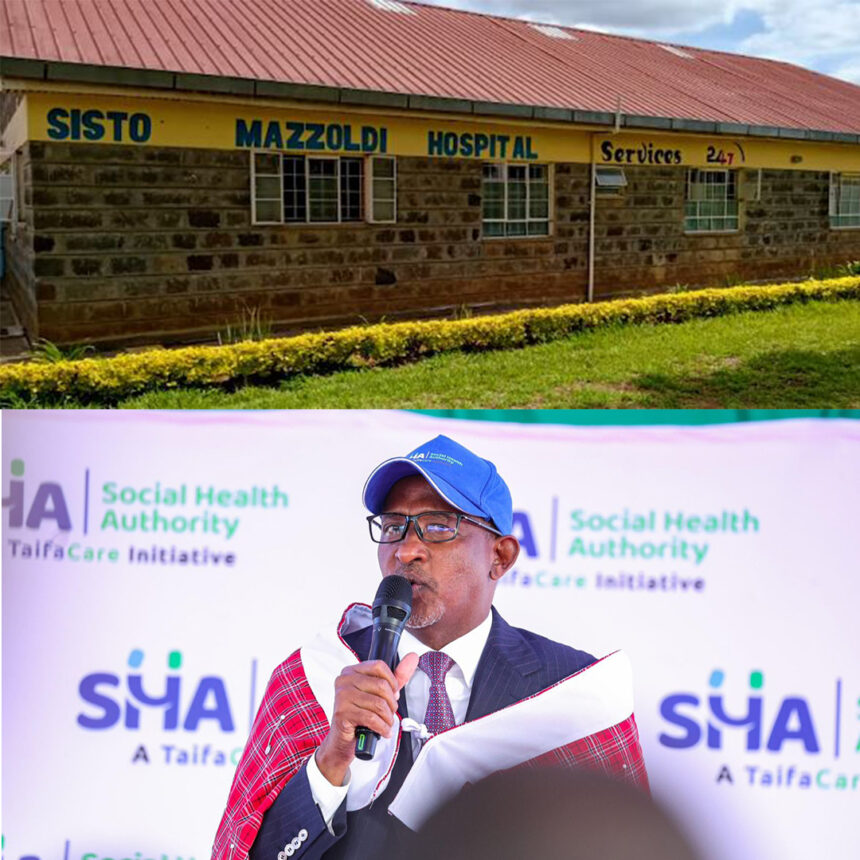
Sisto Mazzoldi Hospital in Nakuru County illustrates the problem. A former employee, Justus, revealed that staff provided their ID numbers to register as fake patients. The hospital submitted fraudulent claims to SHA for non-existent operations. Staff split the payments, though some never received their share. Evidence shows these schemes continued from the NHIF era into SHA’s current operations.
Former radiographer Amos Kiprop observed more irregularities. Patients used names sent in messages. Staff used colleagues’ insurance to cover procedures they did not perform. Unlicensed personnel attended to patients. Hospital staff duplicated lab reports to claim higher payments. Kiprop reported tax evasion and fraud to the Kenya Revenue Authority, but authorities ignored his complaints, exposing weaknesses in oversight.
Maternal Tragedy at Sisto Mazzoldi Hospital
Fraud has severe human consequences. Jackline Chebet Ng’etich, in her 30s, died while giving birth at Sisto Mazzoldi Hospital. She chose the hospital because it was faith based. Her baby died during labor, and she passed away shortly afterward.
Hospital staff delayed referring her to a better equipped facility. An ambulance waited over 90 minutes while the hospital refused to transfer her. By the time they sent her elsewhere, she had already died. Some staff attending her lacked proper licenses. The case raises urgent questions about professional standards and patient safety.
Government Action and Lessons Learned
The government responds firmly to healthcare fraud. SHA and the Ministry of Health introduced biometric verification to prevent ghost claims. Officials recovered over Sh13 billion in fraudulent payments. Authorities suspended more than 1,100 health facilities. Affected hospitals operate in Nairobi, Homa Bay, Bungoma, Mandera, Kilifi, and Kisumu. Specific facilities include Grassroot Community Healthcare Ltd, Akemo Valley Maternity and Nursing Home, Al-Baitul Tiiba Hospital, Equity Afia clinics, and Westlife Hospital Ltd. Authorities withdrew SHA access from staff involved in fraud and referred many cases to the Directorate of Criminal Investigations.
Despite government action, challenges persist. Fraud erodes public trust. Patients face danger when hospitals prioritize profit over care. Hospitals must practice ethics, ensure staff licensing, follow referral protocols, and maintain financial transparency. Citizens and healthcare workers must report wrongdoing to protect lives and public resources.
Healthcare is more than a service. It represents a moral obligation. Protecting Kenya’s health system requires vigilance, transparency, and accountability. Fraud, negligence, and unethical behavior cannot coexist with the duty to preserve life. Ghost patients, false claims, and maternal deaths demonstrate the urgent need for ethical, patient-centered care. These lessons remind the nation that safeguarding lives comes first.