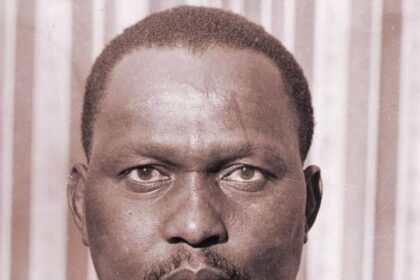

Early Life and Cultural Roots
Mekatilili wa Menza was born around 1860 in a village called Mutara wa Tsatsu in what is now Kilifi County on Kenya’s coast. She belonged to the Giriama people, one of the nine subgroups of the Mijikenda community. From childhood, Mekatilili learned the importance of tradition, community, and spiritual authority. The Giriama valued ancestral rituals and sacred forests called kaya, where elders and spiritual leaders guided society and resolved disputes.
Her family experienced the threats of the era. One of her brothers was kidnapped by Arab slave traders and never seen again. This personal loss likely deepened her resistance to external exploitation and injustice. Growing up immersed in traditional culture, Mekatilili also witnessed the early incursions of foreign powers and traders along the coastal trade routes, including Arab, Swahili, and European merchants who brought goods but also social disruption.
By the 1890s, the British had established control over much of the Kenyan coast. The colonial administration introduced new taxes, forced labour, and land seizures, especially near fertile areas like the Sabaki River Valley. These policies undermined the Giriama way of life and threatened sacred cultural practices. The British also introduced the hut tax and attempted to recruit Giriama young men into portering service actions that alarmed Mekatilili and communities across the region.
Rise of the Giriama Resistance
By 1912, British authorities stepped up their pressure on the Giriama, demanding labour recruitment on plantations and increased taxes. Mekatilili openly rejected these policies. She drew on her status as a widow and cultural elder, which in Giriama society gave her the rare privilege to address elders and speak publicly. She also gained spiritual legitimacy through traditional practices and performances.
In 1913, Mekatilili began organising her people to resist colonial rule. She travelled from village to village performing the kifudu dance, traditionally reserved for funerals. Her trance‑like movements, rhythmic chants, and spiritual authority drew crowds wherever she went. Using performance and oratory, she fused cultural traditions with political messages. This made resistance understandable and morally binding to her people.
Her movement reached its peak in July and August 1913, when a massive gathering took place at Kaya Fungo, a sacred forest meeting site. There, men and women took oaths of resistance. Men swore the fisi oath and women the mukushekushe oath, pledging not to co‑operate with colonial authorities in any form. In Giriama belief, breaking such oaths carried spiritual consequences, reinforcing unity and defiance.
A defining moment came on August 13, 1913, when Mekatilili confronted the British colonial administrator Arthur Champion at a public baraza (meeting) in Chakama. She brought a live hen and her chicks and challenged Champion to seize one. When he reached for a chick, the hen pecked his hand. Mekatilili used this symbol to warn that the Giriama would fiercely protect their children from colonial exploitation. Some accounts also say she slapped Champion, an act of bold defiance that spread her legend among her people.
The British responded with force. They shot into crowds, burned villages, and destroyed parts of the kaya forests. These clashes marked the Giriama Uprising of 1913–1914, locally known as Kondo ya Chembe (Champion’s War), one of the earliest organized anti‑colonial movements in Kenya.
Arrest, Exile, and Defiance
Colonial authorities saw Mekatilili as the central threat to their control. On 17 October 1913, they arrested her and fellow leader Wanje wa Mwadorikola and exiled them to Kisii in western Kenya, far from their coastal homeland. The goal was to silence her and break the movement
Even in exile, Mekatilili remained courageous. She reportedly lectured colonial officials for the harm their policies caused, including cultural erosion and forced compliance. Her boldness angered colonial authorities, but her words only strengthened her reputation. In 1914, she escaped from Kisii and walked back to the coast a journey of hundreds of kilometres to rejoin her people and continue resistance. Some accounts even describe a second capture and exile to Kismayu in present‑day Somalia, from which she also escaped.
While the uprising eventually lost momentum under British military pressure, Mekatilili’s influence persisted. Her defiance demonstrated the limits of colonial authority when faced with united local resistance rooted in culture and tradition.
Legacy and Historical Significance
Mekatilili wa Menza continued advising her community long after the formal uprising ended. She drew on traditional institutions, spirituality, and grassroots mobilisation to resist colonial demands. Her leadership challenged both colonial power and local gender norms, proving that women could lead mass political action even without formal titles or weapons.
She died in 1924, leaving behind a powerful legacy of courage and resistance. For decades after, her story survived in oral histories, cultural celebrations, and community memory. In the 1980s, during Kenya’s feminist movement, activists invoked her as a symbol of women’s empowerment and social change. In August 2020, Google honoured her with a Google Doodle, marking her enduring significance not only in Kenya but across the world.
Today, Mekatilili wa Menza is remembered as one of Kenya’s first major freedom fighters. Her name stands alongside those of later independence leaders as a pioneer of resistance, cultural pride, and women’s leadership. Her legacy continues to inspire new generations to defend cultural identity, challenge injustice, and unify communities in the pursuit of freedom and dignity.