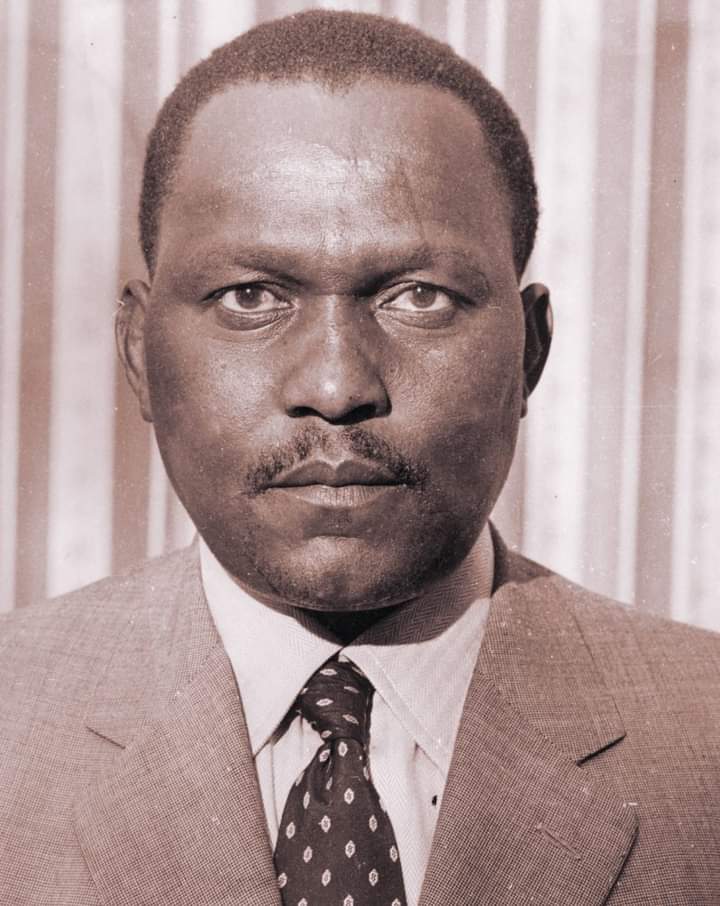
Early Life and Education
Paul Joseph Ngei was born on 18 October 1923 in Kiima Kimwe, near Machakos town. He grew up in a prominent Kamba family. His parents valued education and service. From a young age, Ngei showed intelligence and ambition. He cared deeply about his community.
He attended Alliance High School, one of Kenya’s top schools. Later, he studied journalism at Makerere University in Uganda. These experiences shaped his thinking. They exposed him to ideas of freedom, leadership, and civic duty.
Struggle for Independence
In the 1940s, Ngei joined the nationalist movement. He opposed British colonial rule. He demanded independence for Kenya. His courage and leadership made him a prominent figure.
In 1952, the British declared a state of emergency. They arrested Ngei for his activism. He joined the legendary Kapenguria Six, alongside Jomo Kenyatta, Fred Kubai, Bildad Kaggia, Achieng’ Oneko, and Kung’u Karumba. The colonial government accused them of supporting the Mau Mau uprising. The authorities imprisoned the six in Kapenguria, Western Kenya.
During detention, Ngei acted bravely. He protected Jomo Kenyatta when a colonial officer threatened him. He spent nearly a decade in prison. In 1961, authorities released him, two years before Kenya gained independence.
Political Career and Leadership
After release, Ngei entered politics. He initially joined KANU, the party leading Kenya to independence. In 1962, he formed the African People’s Party (APP). The party represented the Kamba community. It gave minorities a voice in politics.
In 1969, Ngei won the Kangundo Constituency parliamentary seat. Also, he served until 1990. He also held several cabinet positions under Presidents Kenyatta and Moi. He influenced policies across many sectors.
His career faced challenges. In the 1960s, authorities accused him of corruption over maize distribution. The government temporarily suspended him from the cabinet. He spoke out boldly and acted decisively. His actions earned both respect and criticism.
In 1990, a court declared Ngei bankrupt. He gave up his parliamentary seat. Despite this, people continued to respect him as a statesman.
Legacy and Impact
Paul Ngei died on 15 August 2004 at age 81. He battled diabetes in his final years. The government honored him with a mausoleum at Mbilini in Kangundo. Later, officials unveiled a statue to celebrate his legacy.
People remember Ngei as a freedom fighter, politician, and community leader. His life reflects Kenya’s journey from colonial rule to independence. He again showed courage and dedication and sacrificed for the nation and his people.
He inspired future generations of leaders. His story teaches patriotism, resilience, and service. Ngei’s legacy reminds Kenyans that freedom requires sacrifice. His life continues to inspire ordinary citizens and leaders alike.