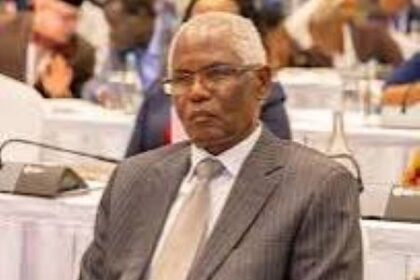

Charity Kaluki Ngilu stands among Kenya’s most respected and influential leaders. Her journey reflects resilience, courage, and an unwavering devotion to public service. Over decades in the political arena, she has challenged norms, broken barriers for women, and served in high impact leadership roles at both national and county levels. Ngilu’s legacy extends beyond policy to inspiration especially for women and girls who see in her story a model of possibility in a field long dominated by men.
Early Life and Education: Roots of Resilience
Charity Ngilu was born in 1952 in Mbooni, a rural area in what was then Makueni District. She grew up in a large family as one of 13 children. Life in her community taught her the value of hard work, cooperation, and perseverance. These early experiences shaped her outlook on life, one rooted in service and collective upliftment.
Despite financial challenges, Ngilu excelled in school. Her academic ability earned her a place at Alliance Girls High School, one of Kenya’s most prestigious institutions. Success there opened doors to further learning at the Government Secretarial College and later the Kenya Institute of Administration. These formative years equipped her with critical organisational and leadership skills that would serve her in future public roles.
Before entering politics, Ngilu worked in administrative and managerial positions. She served as a secretary at the Central Bank of Kenya and later in private corporate roles in Nairobi. These early professional experiences sharpened her confidence and exposed her to complex organisational dynamics, laying the groundwork for her future in national leadership.
Breaking Barriers in National Politics
Charity Ngilu’s entry into national politics was nothing short of groundbreaking. In 1992, she won the parliamentary seat for Kitui Central, a remarkable achievement at a time when women were vastly underrepresented in Kenya’s political arena. Her victory signaled the beginning of a political career defined by courage, resilience, and a willingness to challenge entrenched norms. Ngilu did not merely participate in politics; she reshaped the perception of what women could achieve in leadership, showing that competence and vision transcend gender.
In 1997, Ngilu made history by becoming one of the first women in Kenya to run for the presidency. This move was revolutionary, occurring in an era dominated by male political heavyweights and deeply patriarchal norms. Her candidacy sent a bold message about gender equality and the need for inclusive leadership. Though she did not win, her campaign inspired countless women across the country to consider political careers and helped normalize the idea of women occupying top political offices, gradually reshaping societal expectations.
Throughout the early 2000s, Ngilu strengthened her reputation as a champion of social justice and reform. She became known for her fearless advocacy on issues affecting marginalized communities, women, and youth. Her voice often challenged traditional norms, exposing inequalities in policy and practice. Ngilu combined assertiveness with empathy, listening to constituents, understanding their struggles, and using her platform to amplify their concerns at the national level.
Her appointment in 2003 as Kenya’s Minister of Health marked another milestone. She tackled systemic healthcare challenges, promoting access in underserved regions. Later roles, including Minister of Water and Irrigation and Cabinet Secretary for Land, Housing, and Urban Development, allowed her to address critical social needs. Ngilu’s political journey illustrates more than personal achievement; it represents a transformation in Kenya’s political landscape, opening doors for women and marginalized groups, proving that effective leadership is rooted in vision, inclusivity, and tangible impact.
Governor of Kitui
In 2017, Ngilu entered another historic chapter by being elected Governor of Kitui County. This position marked her transition from national politics to county leadership where policy meets people’s everyday lives.
As governor, Ngilu emphasised sustainable development and economic empowerment. She launched initiatives aimed at boosting local industry, food security, and job creation. Among her notable achievements was the establishment of the Kitui County Textile Centre (Kicotec). The facility focused on creating employment opportunities, especially for women and youth, by building local capacity for textile production. During national challenges, including the COVID-19 pandemic, Kicotec demonstrated agility by repurposing its facilities to produce protective face masks, contributing to public health responses.
Ngilu also took bold steps in environmental protection. She implemented measures to address illegal sand harvesting, curb unregulated charcoal transportation, and promote responsible resource management. These efforts reflected a commitment to long-term ecological sustainability, a priority for communities dependent on natural resources for livelihood.
Her leadership style at the county level combined vision with responsiveness. Ngilu often engaged directly with citizens, listening to their concerns and integrating local perspectives into planning. Through participatory governance, she strengthened public trust and modelled leadership that is accountable and grounded in community needs.
Champion for Women’s Empowerment
Charity Ngilu’s impact extends beyond policy and office titles. She has played a pivotal role in advancing women’s participation in politics and leadership. Long before gender equity became central to public discourse, Ngilu challenged gender norms simply by standing for leadership roles historically dominated by men.
Her presidential bid in the late 1990s was more than a political move, it was a statement about women’s capabilities. That campaign inspired other female leaders and contributed to a slow but steady increase in women’s representation in Kenya’s Parliament, Senate, and county governments.
Prominent Kenyan leaders, including former governors and national figures, have acknowledged Ngilu’s role in encouraging women to pursue leadership. Her mentorship, visibility, and tenacity have opened paths for emerging female politicians. This legacy, of expanding space for women in public life, may be her most enduring contribution to Kenya’s democratic evolution.
Challenges, Controversies, and Enduring Influence
No long political career is free of challenges, and Ngilu’s journey has had its share of scrutiny. During her time in various Cabinet roles, she faced criticism over administrative decisions and policy disagreements. At times, she stepped away from frontline national politics, only to return with renewed focus on community development.
These moments of controversy, however, did not diminish her resolve. Instead, they reinforced her commitment to public service. Her willingness to engage with difficult issues, from land reform to healthcare access, demonstrated a leader who did not shy away from complexity.
Throughout her career, Ngilu has balanced responsiveness to immediate citizen needs with a broader vision for structural change. Whether navigating national policy debates or steering county development programmes, she has remained a visible and vocal advocate for equity, inclusion, and opportunity.
Her influence is widely recognised across political divides. Leaders in government, civil society, and grassroots movements have noted her as a mentor, a challenger of norms, and a builder of institutions. This respect across sectors underlines the depth of her contribution to Kenyan public life.
Legacy and Continuing Influence
Charity Ngilu’s story is one of perseverance, vision, and service. From her rural beginnings to national prominence, she has consistently broken barriers and expanded the realm of what is possible for women in leadership. Her career spans legislative halls, national ministries, and county governance, each reinforcing her commitment to social welfare, economic opportunity, and inclusive leadership.
But beyond the offices and titles, Ngilu’s legacy is best measured in the lives she has touched, the young women inspired to run for office, the families benefitting from local development projects, and the communities empowered through participatory governance.
Her influence continues to shape debates about leadership, gender equity, and public accountability in Kenya. As the nation moves forward, Ngilu’s journey offers both a model and a challenge, a reminder that leadership is not merely about holding power, but about expanding opportunities for others to lead.
Follow Our WhatsApp channel for more updates like this