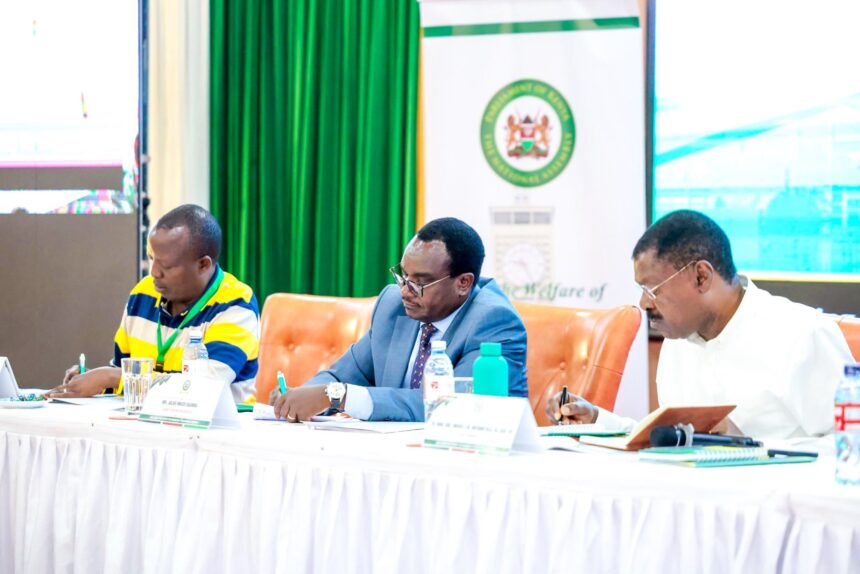
Education sits at the heart of Kenya’s development agenda. Leaders often describe it as well-funded and well-managed. Recent disclosures now tell a different story. The government admits it does not know the full cost of educating a child from primary school to university. That admission exposes a deep structural weakness. It raises serious questions about planning, accountability, and sustainability in the education sector.
Education consistently receives between 25 and 28 percent of the national budget. This allocation meets global benchmarks set by UNESCO. However, outcomes on the ground continue to decline. The challenge lies not in budget size alone but in how funds are planned, released, and used.
A System Funded Without Clear Numbers
For years, education financing in Kenya has suffered from erratic budgeting and delayed disbursements. Parliament approves allocations late. Treasury releases funds in bits. Schools operate without certainty. The Ministry of Education recently disclosed a sector-wide deficit of Sh48.3 billion. The gap affects all levels of basic education. Primary schools face a shortfall of about Sh2.7 billion. Junior schools lack over Sh20.8 billion. Senior schools face a deficit of nearly Sh24.9 billion.
Combined, basic education requires more than Sh136 billion annually. Actual allocations stand at about Sh87.8 billion. The difference leaves schools struggling to meet basic obligations. Free Day Secondary Education illustrates the crisis clearly. Each learner should receive Sh22,244 per year. That amount has not been fully disbursed since the 2018/2019 financial year. Funding has declined even as enrolment rises. The worst year was 2023/2024. Schools received only Sh12,599 per learner for the entire year. That figure covered barely half of operational needs. Inflation worsened the situation. Food prices rose. Utility bills increased. Transport costs surged.
In 2026, the trend persists. The government released Sh7,952 per learner for the first term. That amount fell short of the expected 50 percent allocation of Sh11,122. For large schools, the shortfall runs into millions of shillings. Officials insist funds follow a termly formula. They promise 50 percent in term one, 30 percent in term two, and 20 percent in term three. In practice, delays weaken the model. Some schools receive funds weeks after reopening. Others wait much longer. Another concern lies in data accuracy. The Ministry conducted a national learner audit to verify enrolment. The exercise ended last year. The findings remain unpublished. Without verified numbers, capitation planning becomes unreliable.
The Real Cost of Running Schools
School heads argue that government allocations fail to reflect the true cost of education. Data from the Kenya Secondary School Heads Association paints a clearer picture. A learner in a national school costs about Sh378 per day. Extra-county and county schools spend roughly Sh358 per learner daily. Day schools require about Sh110 per learner each day.
Over a 252-day school year, national schools spend more than Sh95,000 per learner. Extra-county schools spend about Sh90,000. Day schools spend close to Sh27,700 per learner annually. Government capitation covers only a fraction of these costs. These expenses fund essential services. They include teaching and learning materials., cover boarding, utilities, repairs, and maintenance.Also, they pay non-teaching staff. They support medical care, insurance, and student activities.
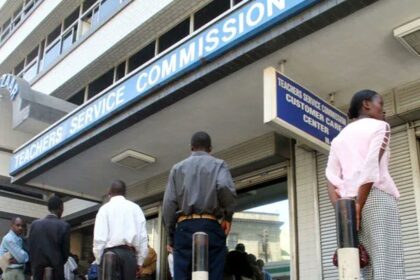
When capitation falls short, schools shift the burden. Parents pay higher fees. Development levies increase. Lunch programmes become expensive. Inequality widens. Approved fees guidelines no longer match economic realities. Many schools operate under silent deficits. Some delay payments to suppliers. Others defer maintenance. School administrators face growing compliance risks. Teacher training also suffers from underfunding. Kenya employs over 350,000 teachers under the Teachers Service Commission. New curricula demand new skills. Continuous professional development remains under-resourced. Infrastructure gaps persist. Many junior schools lack laboratories. Classrooms remain overcrowded. Sanitation facilities strain under rising enrolment. Funding does not meet demand.
Textbooks, Trust, and the Cost of Delay
Textbook supply reveals another weakness in education financing. Publishers delayed printing after the government failed to clear past debts. At one point, outstanding payments exceeded Sh11 billion. Grade 10 learners reported to school without textbooks. Books meant for delivery by September arrived months later. Initial deliveries covered only about 40 percent of required materials. Textbooks have a lifespan of four years. Delayed supply reduces their value. Learning gaps emerge. Teachers improvise. Students fall behind.
Government officials highlight recent payments of Sh5.6 billion to publishers. They promise one-to-one book ratios and improved delivery timelines. The disruption, however, already affected learning outcomes. President William Ruto has defended education reforms. He points to the release of Sh44 billion before school reopening. He promises additional disbursements later in the year. Even so, the sector remains Sh48.3 billion short.
The truth is clear. Education funding in Kenya lacks clarity, consistency, and credibility. Promises exist. Data gaps persist. Deficits grow. Without knowing the true cost of education, reforms rest on weak foundations, timely disbursement, schools cannot operate effectively. Without transparency, public trust erodes. Education remains Kenya’s strongest equaliser. It shapes productivity and social mobility. Treating it casually threatens the country’s future. Real reform begins with honest data. It requires realistic budgeting and predictable funding. Until then, schools will struggle. Parents will pay more. Learners will carry the cost.