The Orange Democratic Movement (ODM) is grappling with an intensifying internal divide as two factions position themselves ahead of the 2027 general elections. The split has become increasingly visible, drawing national attention and raising questions about the party’s unity and electoral strategy. On one side, the Linda Mwananchi (Protect the People) faction, led by Secretary General Edwin Sifuna and Siaya Governor James Orengo, has held high-profile rallies urging Kenyans not to re elect President William Ruto. On the other, the Oburu Oginga led faction maintains it represents the legitimate ODM leadership, focusing on coalition talks with the ruling United Democratic Alliance (UDA) while emphasising party unity and strategic planning.
The tension has created a complex political landscape where both factions claim legitimacy and popularity. Observers note that how the factions navigate this period could redefine ODM’s role in the 2027 elections and influence broader political alignments in Kenya.
Linda Mwananchi Faction Drives Grassroots Opposition
The Linda Mwananchi faction pushed its political agenda despite threats. They faced attempts to disrupt their gatherings. Police said they were unaware of the Kakamega rally. Local officials, including Governor Fernandez Barasa and his deputy Ayub Savula, had vowed to stop ODM meetings at Amalemba Grounds.
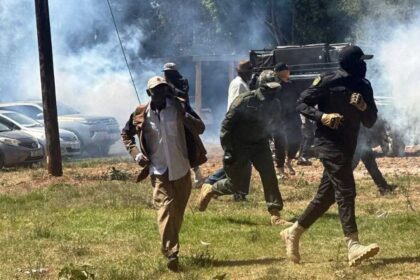
Undeterred, the faction mobilised thousands of supporters. They showcased strong organisation and determination. The rally turned violent. Clashes broke out between Linda Mwananchi supporters and groups backing President Ruto’s two-term bid. One person died. Two others were seriously injured. Confrontations erupted over chants of “one term” and “two terms.” At least one youth was hit with wooden batons and stones. The incident shows how political tensions can escalate into physical conflict.
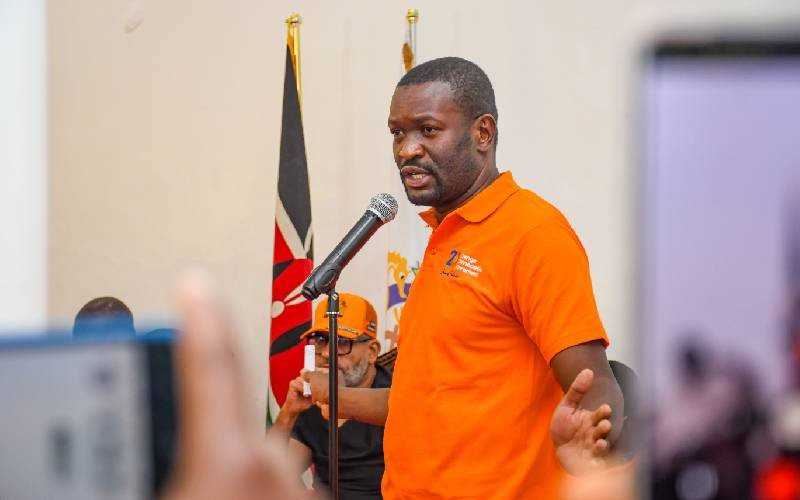
Despite the violence, leaders continued the rally. Vihiga Senator Godfrey Osotsi and National Assembly MP Babu Owino addressed the crowd. They said ODM has enough leaders capable of becoming president. They named Sifuna, Babu, Orengo, and themselves. The leaders stressed adherence to ODM’s 10-point agenda. They called for a grassroots-driven revolution. They want ordinary citizens at the centre of political change. Sifuna accused President Ruto of ignoring the commitments in the 10-point agenda signed with the late former Prime Minister Raila Odinga. He framed the opposition as principled and focused on real issues.
The faction demonstrated careful strategic planning. The rally was initially scheduled for Mbale, but organisers shifted the event to Kakamega Town to avoid interference. Later, they returned to Mbale in Vihiga County, ensuring that crowds had gathered before rival groups could disrupt proceedings. Leaders credited volunteers and residents for facilitating smooth mobilisation, highlighting the faction’s strong community networks. This approach underscored their ability to outmanoeuvre security agencies and rivals while maintaining momentum on the ground.
Oburu Oginga Faction Counters with Legitimacy Claims
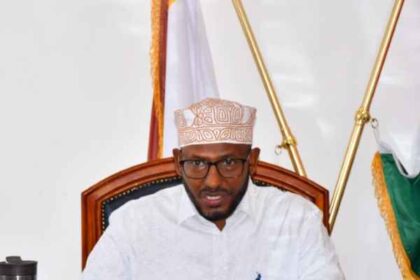
In contrast, the Oburu Oginga-led faction has sought to portray itself as the legitimate ODM leadership, downplaying fears of a party split. Speaking during the Linda Ground (Protect the Base) rally in Siaya Town, Dr Oburu Oginga emphasised unity, claiming that ODM remains stable and prepared for the 2027 elections. He reassured members that no one would be expelled from the party and encouraged anyone uncomfortable with the leadership’s direction to leave voluntarily. National Assembly Minority Leader Junet Mohamed reinforced this stance, dismissing the rival faction’s claims as exaggerated and asserting that the Oburu-led faction commands the majority of ODM’s leadership. The faction announced that ODM had formally exited the Azimio coalition, signalling a strategic shift toward negotiating policies, development programmes, and the allocation of positions in preparation for the upcoming elections.
Leaders including ODM Chairperson Gladys Wanga, Cabinet Secretaries Opiyo Wandayi, John Mbadi, and Ali Joho pledged support for Dr Oginga’s coalition negotiations with UDA. They stressed that strategic planning, rather than opposition for its own sake, would secure ODM’s influence nationally. Dr Oginga also criticised Governor Orengo for focusing on factional rallies instead of gubernatorial responsibilities, framing his group as prioritising long-term political strategy over regional disputes.
Implications for ODM and Kenya’s Political Landscape
The ongoing factional battles within ODM highlight deeper questions about party cohesion, leadership succession, and the balance between ideology and political strategy. Both factions claim legitimacy, yet they differ fundamentally in approach. The Linda Mwananchi faction leans on grassroots mobilisation, opposition to President Ruto, and strict adherence to ODM’s original 10-point agenda. Conversely, the Oburu Oginga faction emphasises coalition building, negotiation with the ruling party, and maintaining majority leadership control to influence national policy. Analysts suggest that this split could reshape political alignments in Kenya, especially in the Luo Nyanza region, where ODM has historically held strong support. How the factions reconcile or fail to do so will likely determine the party’s ability to negotiate with other political actors and influence the 2027 elections.
The factions’ moves also underscore the changing dynamics of Kenyan politics. Grassroots mobilisation, strategic alliances, and regional influence now interact in complex ways, with leadership legitimacy contested not only internally but also in the eyes of the electorate. The way these factions engage voters and manage internal disputes could redefine ODM’s public image, potentially affecting its nationwide appeal. The violent incidents during the Kakamega rally further illustrate the stakes involved. Political rivalry is no longer confined to debates and rallies; it has increasingly manifested in physical confrontations, exposing the urgent need for stronger conflict management mechanisms and adherence to democratic norms. Both factions face the challenge of maintaining public trust while asserting their political agendas, with each move closely scrutinised by supporters and opponents alike.
What Awaits ODM
Looking forward, ODM must navigate a delicate balance between internal cohesion and political competitiveness. The Linda Mwananchi faction plans to continue rallies across key counties, including Nairobi, Mombasa, Narok, Kisumu, Siaya, Homa Bay, Migori, Kisii, Turkana, and Mandera. Meanwhile, the Oburu Oginga faction continues to pursue coalition talks and position the party strategically for national influence. Observers note that ODM’s ability to manage these internal divisions will shape its electoral fortunes in 2027. Unity remains crucial, yet leadership rivalries are unlikely to disappear. The party’s national influence, its negotiating power in coalitions, and its capacity to drive policy will all hinge on how effectively these factions reconcile differences or assert dominance.
Ultimately, the ODM saga demonstrates that leadership contests, strategic planning, and grassroots mobilisation remain central to Kenya’s evolving political landscape. As the 2027 elections approach, both factions face the challenge of translating their strategies into political outcomes while maintaining credibility, influence, and public support.