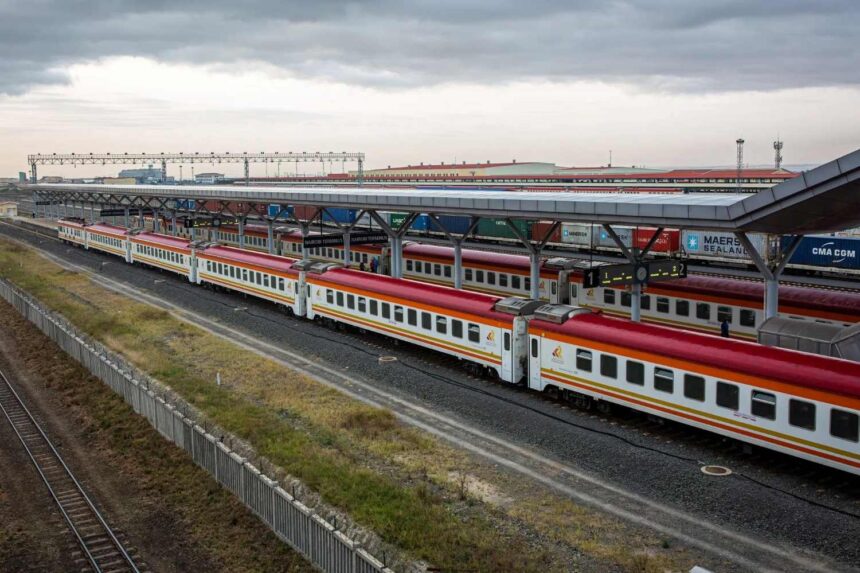
Kenya’s Standard Gauge Railway (SGR), at the center of the ongoing KPA – KRC dispute, stands as one of the largest infrastructure investments in East Africa. It was designed to transform transport, cut logistics costs, and position Kenya as a regional trade hub. However, the ongoing dispute between the Kenya Ports Authority (KPA) and the Kenya Railways Corporation (KRC) shows that financing such mega projects comes with long-term financial risks.
At the center of the dispute is Sh5.95 billion linked to an escrow account meant for loan repayment. The funds relate to a Chinese loan issued by China Exim Bank in 2014 to finance the railway. Auditor-General Nancy Gathungu flagged the failure to remit the funds as a breach of loan terms, raising concerns about penalties and taxpayer exposure. This issue is not just about a delayed payment. It reflects deeper structural challenges in how infrastructure projects are financed, managed, and sustained over time.
The Take-or-Pay Model and Financial Risk
The SGR financing agreement included a “take-or-pay” arrangement. This model required KPA to guarantee a minimum cargo volume through the railway each year. If the target is not met, KPA must compensate KRC for the shortfall. Such agreements are common in large infrastructure projects. Lenders use them to reduce risk and ensure stable revenue flows. However, they shift financial pressure onto public institutions. In Kenya’s case, KPA effectively acts as a guarantor of railway usage, even though it does not directly control all cargo flows.
This creates a structural imbalance. Ports depend on market forces, shipping trends, and private sector decisions. Railways, on the other hand, require consistent volumes to remain financially viable. When demand fluctuates, the burden falls on the guaranteeing institution. The escrow account adds another layer of complexity. It is designed to secure loan repayment by holding funds in advance. While this protects lenders, it reduces the liquidity available to KPA. The Auditor-General has warned that this arrangement increases pressure on the authority’s cash flow. Despite these risks, the SGR has recorded growth. Cargo volumes rose to 7.4 million tonnes, up from 6.5 million the previous year. This shows increasing adoption of the railway. However, operational success does not eliminate financial obligations tied to rigid contracts. The dispute over the Sh5.95 billion suggests that even when performance improves, disagreements over accounting, reconciliation, and timing can still arise. This highlights the importance of clear data alignment and transparent financial systems.
The Weight of Debt and Loan Restructuring
Kenya borrowed over $5 billion to build the SGR in phases. The railway connects Mombasa to Nairobi and later extends to Naivasha. The project aimed to improve cargo movement from the port to inland markets and neighboring countries. However, the scale of borrowing has contributed to Kenya’s rising public debt. The country’s debt now stands close to 70 percent of GDP. A significant portion of this debt is denominated in foreign currencies, especially the US dollar. To manage this burden, Kenya renegotiated the SGR loans. The repayment period was extended to 2040, and a grace period was introduced for principal payments. The government also converted part of the loan from dollars to yuan to reduce currency risk.
These changes aim to ease short-term financial pressure. Annual servicing costs are expected to drop, giving the government more fiscal space. However, extending loan tenures also means that the country remains in debt for a longer period. This reflects a broader trend in developing economies. Governments often restructure debt to manage immediate challenges, even if it increases long-term obligations. The goal is to balance economic stability with ongoing development needs. Kenya’s strategy also includes diversifying its debt profile. By reducing reliance on dollar-denominated loans, the country seeks to limit exposure to exchange rate fluctuations. This is critical because currency depreciation can significantly increase repayment costs. At the same time, the government continues to invest in infrastructure. Plans to extend the railway toward regional borders and upgrade key facilities show that development priorities remain strong. However, these investments must align with sustainable financing strategies.
Lessons for Infrastructure Financing and Governance
The KPA–KRC dispute offers important lessons for Kenya and other countries pursuing large infrastructure projects. First, financing models must be realistic. Demand projections should reflect market conditions, not just optimistic forecasts. Second, contracts must be transparent. Many details of the SGR agreement remain undisclosed, limiting public understanding and accountability. Clear and open agreements help prevent disputes and build trust among stakeholders. Third, coordination between institutions is essential. The dispute highlights gaps in data alignment, billing systems, and financial reporting. Strong institutional frameworks can reduce such conflicts and improve efficiency.
Fourth, risk-sharing mechanisms must be balanced. While take-or-pay agreements protect lenders, they can overburden public agencies. Future projects should consider more flexible arrangements that distribute risk more evenly. Finally, debt sustainability must remain a priority. Infrastructure projects can drive economic growth, but they must not create unsustainable financial pressure. Governments need to align borrowing with long-term repayment capacity.
Kenya’s SGR remains a critical national asset. It has improved transport efficiency, reduced travel time, and enhanced trade connectivity. These benefits are significant and will continue to shape the country’s economic landscape. However, the financial structure behind the project requires careful management. The dispute over escrow payments is a reminder that infrastructure success is not only measured by usage but also by financial stability. As Kenya moves forward, the focus must shift toward strengthening governance, improving transparency, and ensuring that infrastructure investments deliver both economic and financial returns. The SGR story is still unfolding, and its lessons will influence how future projects are designed and financed. In the long run, sustainable infrastructure development depends on more than construction. It requires disciplined financial planning, strong institutions, and policies that balance growth with responsibility.