
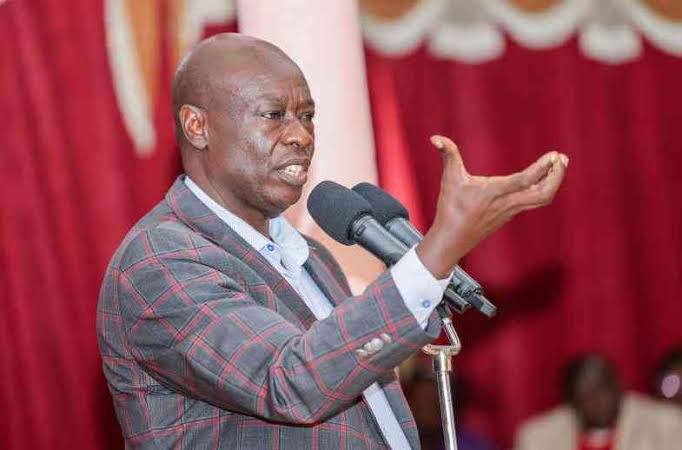
Political insults have become a common feature of public discourse in Kenya. What began as sharp political rivalry has slowly evolved into sustained personal attacks between leaders. In the early years after the 2010 Constitution of Kenya promulgation, political debate largely focused on reforms, governance, and national rebuilding. However, as competition for power intensified especially after the 2013 Kenyan general election and 2017 Kenyan general election leaders increasingly turned to emotional and confrontational rhetoric.
This trend has continued into the current political cycle. High profile leaders such as President William Ruto and Rigathi Gachagua have, at different moments, engaged in sharp exchanges, either directly or through allies. Political rallies, media interviews, and social platforms have amplified these confrontations. Supporters often mirror the same tone, spreading insults further across communities. What started as political messaging has now become a cycle of provocation and response.
Escalation, Patterns, and Political Strategy
Political insults today follow a clear pattern. Leaders use them to mobilize supporters, dominate headlines, and weaken opponents. In many cases, insults replace policy discussions. This shift allows politicians to avoid scrutiny on key issues such as the economy, unemployment, and cost of living. The strategy is tactical. Strong language creates emotional reactions and keeps political bases energized. It also simplifies complex issues into “us versus them” narratives. Over time, this approach deepens divisions along political and sometimes ethnic lines. Kenya has experienced such risks before, notably during the 2007–2008 Kenyan post election violence, when political tensions escalated into widespread unrest.
Beyond the top leadership, other political actors have also contributed to the current climate. Figures such as Martha Karua have openly criticised the rise of insults in politics, warning that it undermines national dialogue. At the same time, leaders like Farah Maalim have faced backlash over inflammatory and offensive remarks directed at sections of the public, especially the youth. Other politicians, digital strategists, and activists have also fueled online confrontations, spreading harsh rhetoric across platforms. This shows that the culture of insults is no longer limited to top leaders but has spread across the political class. The continued use of insults weakens institutions. It reduces respect for leadership and shifts public attention away from accountability. Citizens begin to engage more in defending leaders than in questioning policies. As a result, governance suffers, and trust declines.
Implications for the 2027 Elections and National Stability
Looking ahead to the 2027 elections, the persistence of political insults presents clear risks. Campaigns may become more aggressive and less focused on solutions. Candidates could prioritize attacking opponents over presenting manifestos. This weakens the quality of democratic choice. Voter behavior may also change. Some citizens may become more polarized, voting based on loyalty rather than policy. Others may withdraw from the process entirely due to frustration. Youth participation, in particular, could decline if politics appears toxic and unproductive. There is also a risk of heightened tension during the election period. If inflammatory language continues, it may trigger confrontations at rallies or within communities. While Kenya has made progress in electoral management, the tone of political engagement remains a critical factor in maintaining peace.
To counter this trend, leaders must adopt more responsible communication. Institutions, media, and civil society should promote issue-based debate. Citizens also have a role to play by demanding accountability and rejecting divisive rhetoric. In the long term, Kenya’s democratic strength will depend on shifting from insults to ideas. A more respectful political environment will support unity, informed voting, and credible elections in 2027 and beyond.