
For decades, Kenya’s National Youth Service (NYS) has faced repeated corruption scandals. Officials have repeatedly linked the agency to the misuse of public funds. The government created the NYS to equip young people with vocational skills. Over time, corruption schemes overshadowed this mission. These schemes drained millions, and sometimes billions, from the national treasury.
The latest scandal emerged in late 2025 and early 2026. The Ethics and Anti-Corruption Commission (EACC) uncovered a fresh fraud attempt. Investigators cited phantom suppliers and false delivery claims. Courts later blocked payments exceeding Sh6 billion.
A New “Paper-Supply” Scheme
In January 2026, the EACC stopped a planned Sh6.2 billion payout. The NYS intended to pay several companies for supplies. These supplies included food, uniforms, and diesel. The EACC said the companies filed payment claims using LPOs, invoices, and delivery notes. Investigations failed to confirm that the goods ever reached the NYS.
Investigators described the case as a large “ghost supply” scheme. Court filings accused suppliers and NYS officials of working together. They allegedly created false documents. These records appeared valid on paper. However, no physical deliveries supported them.
The High Court acted on the EACC’s request. It barred the NYS from processing or paying the claims. The court ordered the freeze to remain until a full hearing takes place.
Parties and Players in the Dispute
The frozen claims involve companies linked to businessman Benson Gethi Wangui. Other firms named in related cases also feature in the dispute. These companies claimed billions for deliveries made over several financial years. The EACC says the supporting documents were forged. It adds that officials attached the documents to payment vouchers that lacked approval grounds.
The affected companies dispute the allegations. They say they submitted documents through the Verified Pending Bills system. They argue that the EACC withheld original vouchers and records. This action, they say, denied them a fair chance to prove their claims. They also allege that advice from the Director of Public Prosecutions (DPP) was not fully presented in court.
Constitutional and Legal Backdrop
The case raises serious constitutional issues. Suppliers argue that long delays and limited access to records violate fair administrative action. The Constitution requires public bodies to act lawfully and fairly. The firms claim that branding their claims as fraudulent before trial presumes guilt.
The EACC rejects this view. It says investigations found no proof of delivery. It argues that NYS officers and suppliers colluded to create fake paperwork. The commission warns that releasing the funds would cause further losses to taxpayers.
Recurring Allegations and Past Scandals
The current case follows a familiar pattern. The NYS has faced many corruption investigations. Some involved senior procurement officials. Courts convicted several officials in earlier cases. These schemes cost the agency hundreds of millions of shillings.
Past investigations exposed deep weaknesses. They revealed inflated prices and irregular approvals. They also uncovered manipulated payment systems. These failures triggered parliamentary probes and public outrage. Kenyans questioned how public institutions manage procurement and payments.
Government and Institutional Response
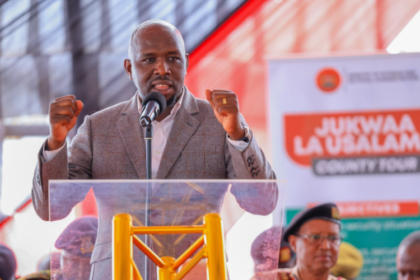
The government responded to renewed concerns. The Cabinet Secretary for Public Service, Geoffrey Ruku, ordered fresh investigations. He directed a review of procurement systems and internal controls. The government aims to strengthen oversight and accountability.
Authorities suspended several senior NYS managers during investigations. Officials urged professional bodies to discipline those involved. Leaders also called for tighter procurement rules. They want to close loopholes that enable fraud.
Governance and Public Trust
The NYS scandals raise wider governance concerns. Critics say repeated corruption erodes public trust. They argue that fraud weakens service delivery. It also diverts funds meant for youth programmes. Others say decisive action shows commitment to accountability. They point to payment freezes and investigations as signs of progress.
Beyond courtrooms, the debate continues. Kenyans demand stronger procurement systems. They want effective oversight and real accountability. The key question remains whether this scandal will finally trigger lasting reform.