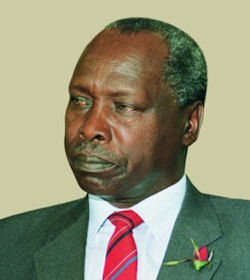
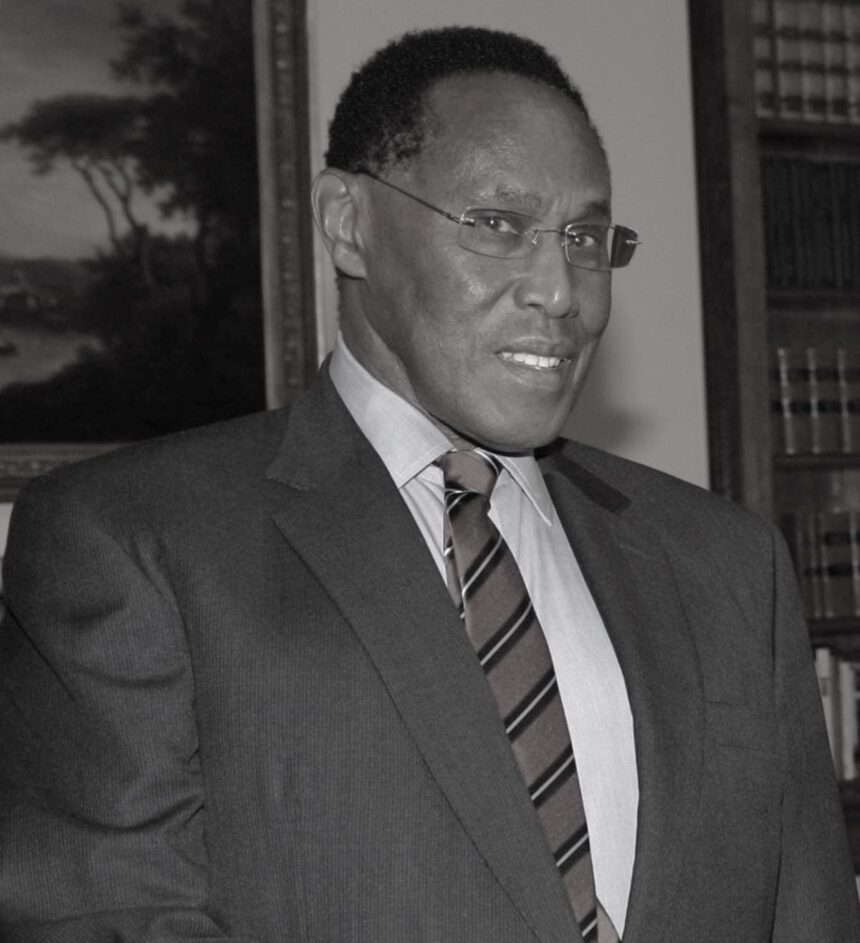
George Musengi Saitoti, born on 3 August 1945 was one of Kenya’s most influential political figures. He trained as a mathematician. He became a trusted technocrat, a senior minister, and Kenya’s longest-serving vice president. His career spanned political transformations, economic reforms, and national crises. His life reveals both the power and challenges of political leadership during and after the Moi era.
From Mathematician to Political Operator
Saitoti was born in Ngong, Kajiado County. His academic journey took him abroad, where he studied mathematics and economics. Degrees from Brandeis University and the University of Sussex, along with a PhD from the University of Warwick, equipped him with a strong foundation. On returning to Kenya, he gained respect as an academic and became head of the Mathematics Department at the University of Nairobi. Beyond teaching, he co-founded the African Mathematical Union and served as its vice president. This combination of leadership and expertise earned him credibility in both technical and economic matters.
In 1983, Saitoti entered politics. He was nominated to Parliament and appointed Minister for Finance under President Daniel arap Moi. Kenya’s economy was fragile. It faced global pressures and domestic challenges. Saitoti introduced structural adjustment programs. These programs aimed to stabilise public finances, liberalise trade, and reduce deficits. In 1989, he became Vice-President. He served until 1997 and briefly from 1999 to 2002. He remains the longest serving vice president in Kenya’s history.
Steering Economy and Politics Through Stormy Waters
Saitoti balanced technocratic skill with political strategy. He guided economic reforms during high inflation and government deficits. He promoted private sector growth and foreign investment. Politically, Kenya was shifting toward multi-party democracy. Saitoti played a key role in the KANU Review Committee, known as the “Saitoti Committee.” The committee recommended constitutional changes that paved the way for multi party democracy. His influence extended beyond cabinet rooms to the party’s political structures.
He served in several portfolios beyond finance. These included Education, Internal Security, and Regional Cooperation. As Minister of Internal Security, he oversaw government strategy against crime and insurgency. His initiatives later contributed to Operation Linda Nchi in Somalia. He demonstrated versatility and the ability to navigate Kenya’s complex political landscape.
Navigating Controversy
Saitoti’s career faced scrutiny. His name appeared in relation to the Goldenberg scandal, a major financial fraud in the 1990s. He served as finance minister during part of the period. He faced investigation but was never convicted. Analysts note he stabilised government operations rather than causing the scandal. In 2002, he sought KANU’s presidential nomination. Political rivalries and party dynamics led to his removal as vice president. Despite setbacks, he remained influential. He earned respect for his intellect, negotiation skills, and strategic thinking. He mediated conflicts and maintained government functionality. His calm and analytical approach distinguished him from leaders relying on populism or patronage.
After the Moi era, Saitoti joined opposition politics. He later served in President Mwai Kibaki’s government as Minister for Education. He championed Free Primary Education, increasing enrolment for millions of children. Later, he served as Minister for Internal Security and Provincial Administration. He oversaw law enforcement, counterinsurgency, and civil administration. His credibility across governments and parties demonstrated adaptability.
Saitoti died in a helicopter crash on 10 June 2012. He was preparing for another presidential bid. His death removed a stabilising and intellectual figure from Kenya’s politics. His legacy is complex. He represents intellectual rigour, policy driven governance, and reformist influence. To others, he symbolizes Kenya’s elite political class. His impact on fiscal reform, multi party democracy, education, and national security is undeniable. Saitoti’s career shows how technocratic skill, loyalty, and pragmatism shape political survival and governance in Kenya.