Early Life and Family Background
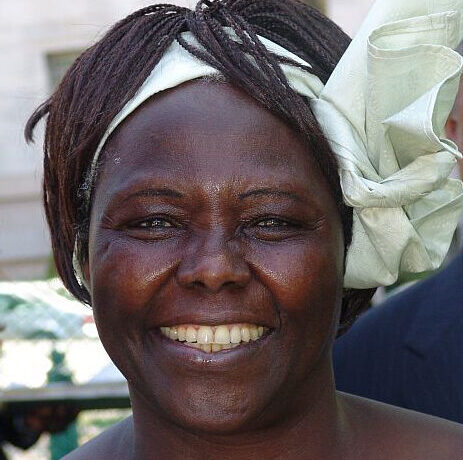
Wangari was born in Ihithe village in Nyeri District, in central Kenya. Her Kikuyu family had lived in the area for generations. In the early 1940s, her parents moved to a farm in the Rift Valley near Nakuru, where her father found work. Since the farm lacked schooling facilities, she returned to Ihithe in 1947 to live with her mother while her brothers attended school there.
She joined Ihithe Primary School at age eight and later transferred to St. Cecilia’s Intermediate Primary School, a Catholic boarding school. At St. Cecilia’s, she learned English, converted to Catholicism, and joined the Legion of Mary. Her studies kept her sheltered from the Mau Mau conflict, which displaced many Kikuyu families, including her own mother.
Wangari excelled academically and earned admission to Loreto High School, Limuru, the only Catholic girls’ high school in Kenya at the time.
Education Abroad and Academic Pursuits
In 1960, she joined hundreds of promising Kenyan students selected for the Kennedy Airlift. She travelled to the United States to study at Mount St. Scholastica College in Kansas, where she majored in biology and minored in chemistry and German. She completed her Bachelor of Science degree in 1964 and proceeded to the University of Pittsburgh for a master’s degree in biology. While in Pittsburgh, she witnessed widespread campaigns for environmental restoration and clean air, experiences that shaped her environmental consciousness.
She returned to Kenya in 1966 but faced discrimination when a promised university job was given to someone else. She later secured a position as a research assistant in the Department of Veterinary Anatomy at the University College of Nairobi. Encouraged by her mentor, she travelled to Germany for part of her doctoral studies and continued her research in Nairobi. In 1971, she earned her PhD in veterinary anatomy, becoming the first woman in East and Central Africa to receive a doctorate.
Academic Career and Gender Advocacy
Wangari progressed through the academic ranks at the University of Nairobi, becoming a senior lecturer, department chair, and, in 1977, an associate professor. She pushed for equal treatment and benefits for female staff and challenged gender-based discrimination within the institution. Though her attempt to unionise academic staff failed in court, many of her proposals were later adopted.
Her involvement in public service grew as she joined organisations such as the Kenya Red Cross, the Kenya Association of University Women, and the Environment Liaison Centre. These experiences exposed her to Kenya’s growing environmental problems and deepened her desire to take action.
The Green Belt Movement
By the mid 1970s, Wangari recognised the link between deforestation, poverty, water scarcity, and women’s struggles in rural Kenya. She believed that restoring degraded landscapes could create jobs and protect livelihoods. This idea led to the founding of Envirocare Ltd, a small enterprise that hired unemployed people to plant trees. Although the business later collapsed due to financial difficulties, it shaped her thinking about community led environmental work.
In 1976, she attended the UN Conference on Human Settlements (Habitat I) in Vancouver, which strengthened her commitment to environmental action. A year later, she proposed tree planting through the National Council of Women of Kenya (NCWK). On 5 June 1977, during World Environment Day, NCWK launched the first Green Belt Movement tree-planting event at Kamukunji Park, Nairobi.
The movement encouraged rural women to grow seedlings and restore indigenous forests. Over time, the movement expanded nationwide and evolved into a model for community empowerment.
Public Battles
Political Restrictions and Continued Activism
In 1982, she attempted to contest the parliamentary seat for her home area, but the courts blocked her candidacy on technical grounds. After losing her university job and being evicted from staff housing, she focused fully on civil society work. She strengthened NCWK programs and widened the Green Belt Movement’s reach.
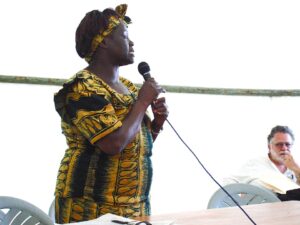
Throughout the 1980s and 1990s, she became known for outspoken environmental activism, especially her efforts to protect Karura Forest and Uhuru Park from politically connected land grabbers. Her activism led to multiple arrests, beatings, and public clashes with the state.
Political Career and International Recognition
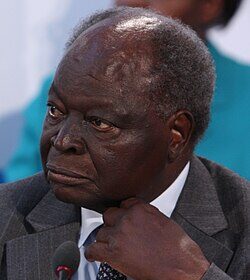
Wangari’s influence grew as Kenya transitioned towards multiparty democracy. In 2002, she won the Tetu parliamentary seat. She later served as Assistant Minister for Environment and Natural Resources under President Mwai Kibaki from 2003 to 2005.
In 2004, she made history as the first African woman to be awarded the Nobel Peace Prize. The Nobel Committee recognised her work linking environmental restoration, sustainable development, democracy, and peace.
Beyond politics, she served in various global organisations, including as an Honorary Councillor of the World Future Council. She authored books and lectures that explored ecology, gender, African culture, and spiritual values in environmental stewardship.
Legacy
Wangari Maathai passed away on 25 September 2011 after a battle with ovarian cancer. Her legacy endures in Kenya and around the world. The Green Belt Movement has planted tens of millions of trees and continues to mobilise communities for environmental justice.
Her life remains a symbol of courage, resilience, and belief in ordinary people’s power to transform their environment and society.
Also read: Kenya’s Literary Icon Ken Walibora