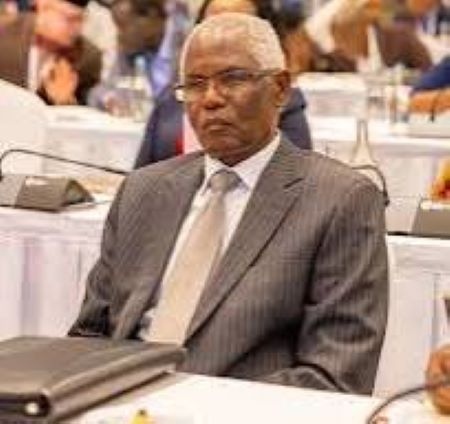
Francis Kirimi Muthaura stands out in Kenya’s history as one of the nation’s most experienced and influential civil servants. Over more than four decades, he served at the highest levels of government, worked in international diplomacy, and later led major institutions. His career reflects deep involvement in public administration, policy direction, and the complexities of Kenya’s political evolution.
Early Life and Rise in Public Service
Francis Muthaura was born on October 20, 1946, in Meru, Kenya. He grew up in a community that valued education and public service. This early environment shaped his lifelong commitment to national development. After completing his early schooling, he enrolled at the University of Nairobi, where he studied economics and political science. He graduated with a Bachelor of Arts degree in 1972 and soon added a Diploma in International Relations, giving him a strong foundation for a career in public affairs and diplomacy.
Shortly after university, Muthaura entered the Kenya Civil Service. He took up a role as District Commissioner in Mombasa District, where he quickly learned firsthand the administrative challenges facing local governments. His skills in coordination and public engagement stood out, and he soon moved into the Ministry of Foreign Affairs.
In the Ministry, Muthaura served in roles that exposed him to complex global issues and negotiations. He became Under Secretary and Head of the Economic Division, where he represented Kenya in key economic discussions. His capability in diplomacy led to ambassadorial assignments, including positions in Belgium, Luxembourg, and the European Community, where he advanced Kenya’s interests in Europe.
Muthaura also served as Kenya’s Permanent Representative to the United Nations in New York. In this role, he engaged with global leaders on issues ranging from development policy to peace and security. His tenure at the UN broadened his understanding of international politics and positioned him as a respected voice for Kenya on the world stage.
Regional Leadership and East African Integration
In 1996, Muthaura took on a continental challenge when he became the first Secretary General of the revived East African Community (EAC). The EAC includes Kenya, Uganda, Tanzania, Rwanda, Burundi, and later South Sudan. At a time when regional cooperation faced historical challenges, Muthaura worked to reinvigorate collaboration across borders. He helped strengthen institutional frameworks and encouraged policies that promoted trade, shared infrastructure, and policy harmonization.
His tenure at the EAC demonstrated his diplomatic skills and deepened his commitment to regional integration. This period laid key foundations for the East African bloc’s future growth, which now boasts a combined population of over 180 million and a shared economic agenda.
Head of Civil Service and Secretary to the Cabinet
In the early 2000s, after President Mwai Kibaki’s election, Muthaura returned to senior leadership within Kenya. He took on strategic roles as Permanent Secretary in key ministries and later became Head of Civil Service and Secretary to the Cabinet positions that made him a central figure in government operations.
As Head of Civil Service, he coordinated policy implementation across ministries, advised the president on administrative matters, and helped shape reforms aimed at efficiency and accountability. His leadership extended to public sector expansion, service delivery improvements, and efforts to modernize government institutions.
During his tenure, Kenya grappled with several major issues, including economic shifts, public sector wage negotiations, and pressures for transparency in governance. Muthaura’s role required balancing political directives with professional administration, often placing him at the intersection of policy and politics.
2007–2008 Post‑Election Violence and ICC Scrutiny
One of the most controversial chapters in Muthaura’s public life unfolded after the 2007 general elections. The disputed elections triggered widespread violence across Kenya, leaving more than 1,100 people dead, many more injured, and hundreds of thousands displaced.
In 2011, the International Criminal Court (ICC) named Muthaura among six senior Kenyan officials accused of crimes against humanity in connection with the violence. Prosecutors alleged that he played a role in facilitating excessive force and planning acts that contributed to the unrest.
In January 2012, the ICC confirmed charges against him, and he appeared before the court in The Hague. The case generated intense debate in Kenya and abroad, raising fundamental questions about accountability, leadership responsibility, and the role of international justice in national affairs.
However, in March 2013, the ICC withdrew its case against Muthaura. Prosecutors cited the unavailability and withdrawal of key witness evidence as a primary reason. With critical evidence lacking, the court concluded it could not proceed with a reasonable prospect of conviction. The withdrawal did not erase the controversy but highlighted the challenges of prosecuting high‑level officials in international courts.
The episode had lasting effects on Kenya’s legal and political conversations. It underscored the delicate balance between pursuing justice and safeguarding national institutions. Though the case did not result in conviction, it remains a defining moment in discussions about leadership, conflict, and accountability.
Leadership Beyond Civil Service: KRA and University Chancellorship
After a long career in government administration, Muthaura continued to serve Kenya in other capacities. In May 2018, President Uhuru Kenyatta appointed him Chairman of the Kenya Revenue Authority (KRA) board. In this role, Muthaura oversaw one of Kenya’s most important economic institutions responsible for domestic revenue collection, tax policy implementation, and revenue integrity.
Under his leadership, KRA pursued reforms aimed at boosting collections and strengthening compliance. The role positioned Muthaura at the nexus of economic policy and national development funding, where revenue stability directly influences public services and infrastructure investment.
His tenure at KRA extended until November 2022, when a new administration appointed a successor. During his years at the authority, Muthaura emphasized efficiency, transparency in tax administration, and alignment with national development priorities.
In June 2024, he took on another prestigious role when he was installed as the sixth Chancellor of Kenyatta University. This position placed him at the forefront of higher education, where his guidance can influence scholarship, research focus, and institutional partnerships. As Chancellor, he carries the responsibility of serving as a bridge between academia and public service, encouraging future generations to pursue leadership with integrity.
Contributions to Education and Public Policy
Throughout his career, Muthaura has contributed to policy areas beyond governance. He played a role in expanding access to secondary education through government programs that broadened school enrolment across regions. He also supported technical and vocational education and training (TVET) initiatives that equipped youth with practical skills for employment and entrepreneurship.
His work reflects an understanding that national progress depends not just on effective administration but also on investing in human capital.
Beyond official duties, Muthaura chairs the Ambassador Francis K. Muthaura Foundation, a trust that offers scholarships for advanced studies to Kenyan students from underserved communities. The foundation also promotes research and public dialogue on leadership, governance, and national development.
Public Perception
Francis Muthaura’s legacy is complex and layered. He served under multiple presidents, navigated diplomatic, administrative, and legal challenges, and led institutions that shape Kenya’s governance and education sectors. His career illustrates the power and challenges of public service, especially in times of national tension and transformation.
Supporters view him as a dedicated public servant who steered institutions through difficult transitions. Critics point to his involvement in the post‑election violence controversy as a reminder of the heavy responsibilities borne by senior officials.
Regardless of perspective, Muthaura’s life reflects a long commitment to public administration and national development. His transitions from civil service to revenue management, and later to educational leadership, show an enduring dedication to serving Kenya across generations.