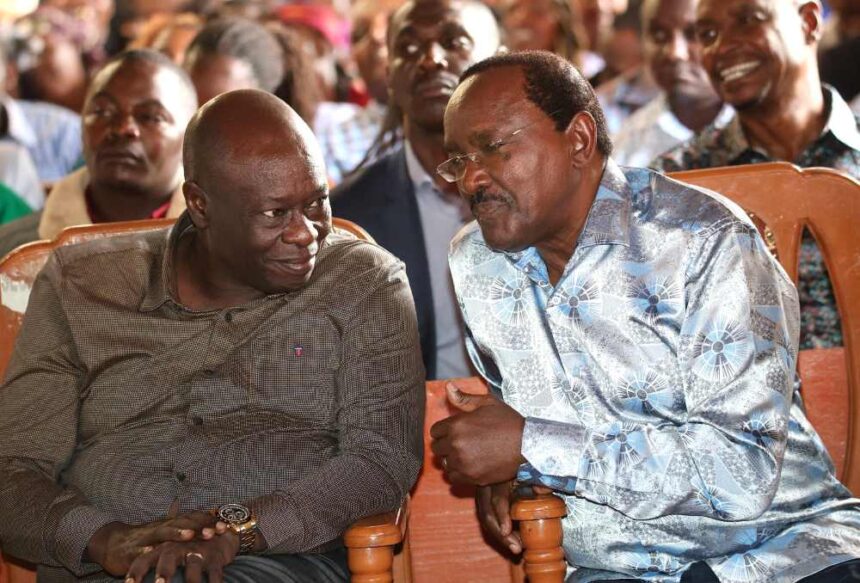
Kenya’s political landscape has long revolved around alliances rather than individuals. While personalities dominate headlines, elections are often decided by how effectively leaders build and manage coalitions. The recent positioning of Kalonzo Musyoka within opposition ranks reflects a familiar pattern. It highlights how coalition politics continues to shape the country’s democratic process.
Coalitions in Kenya are not new. They emerged strongly after the reintroduction of multiparty democracy in the early 1990s. Since then, no serious presidential contender has succeeded without forming broad alliances across regions. From the landmark 1992 Kenyan general election to recent elections, coalitions have remained central to political survival. Kalonzo Musyoka’s position today fits within this enduring structure.
The Rise and Persistence of Coalition Politics
Coalition politics in Kenya developed out of necessity. Early multiparty elections showed that fragmented opposition could not defeat a united ruling party. This reality pushed political leaders to form alliances. Over time, coalitions became more structured and strategic. The 2002 election marked a turning point. Opposition leaders united under the National Rainbow Coalition (NARC) and defeated the long-ruling regime. That moment demonstrated the power of unity. Since then, every major election has featured coalitions as the main vehicles for contesting power. Leaders like Kalonzo Musyoka have operated within multiple coalition formations over the years. In 2007, he ran under the Orange Democratic Movement–Kenya (ODM-K) after earlier alignment shifts within the broader opposition space. Following the disputed election, he became part of the Grand Coalition Government formed after the 2007–2008 post-election crisis. In 2013, he joined the Coalition for Reforms and Democracy (CORD) alongside other opposition leaders. In 2017, he remained within the National Super Alliance (NASA), which brought together several opposition parties to challenge the incumbent administration. More recently, he became a key principal in the Azimio la Umoja–One Kenya Coalition Party during the 2022 elections.
These transitions show that coalition politics is not static. It evolves with changing political realities. Leaders shift alliances, renegotiate positions, and adapt to new power dynamics. For Kalonzo Musyoka, participation in multiple coalitions reflects both experience and resilience within Kenya’s political system. However, coalitions are not easy to manage. They often bring together leaders with competing ambitions. Disagreements over leadership positions and resource sharing are common. These tensions explain why coalitions sometimes collapse before or after elections. Even so, new alliances quickly emerge. This cycle shows how deeply entrenched coalition politics has become.
Regional Kingpins and the Power of Influence
Kenyan politics is heavily influenced by regional leaders. These figures command loyalty from specific communities. Their support can determine the outcome of a national election. This is where Kalonzo Musyoka plays a critical role. As a key leader in the Ukambani region, he represents a significant voting bloc. Politicians seeking national office must engage with such leaders. They rely on them to mobilise voters and deliver support. This dynamic gives regional kingpins strong bargaining power during coalition negotiations.
The influence of regional leaders extends beyond elections. They shape policy priorities and government appointments. Their backing often comes with expectations. In return for support, they seek representation and development for their regions. This system has both strengths and weaknesses. On one hand, it ensures that different regions have a voice in national politics. On the other hand, it can deepen divisions. Leaders may focus more on regional interests than national unity. Despite these challenges, regional kingpins remain central to coalition politics.
Voter Mobilisation as a Strategic Tool
Coalition success depends not only on agreements among leaders but also on voter mobilisation. Political campaigns in Kenya often focus on registering and turning out voters. Numbers matter. A region that delivers a high number of votes gains influence within a coalition. Calls for mass voter registration are a common strategy. Leaders encourage their supporters to register early. They aim to build a numerical advantage before the election begins. This approach reflects a key reality. Elections are often won during the registration phase, not just on voting day.
Historical data supports this trend. In past elections, regions with higher registration and turnout rates have played decisive roles. Political leaders study these patterns carefully. They invest resources in mobilising voters in their strongholds. For figures like Kalonzo Musyoka, voter mobilisation strengthens their position within coalitions. A leader who can deliver votes gains more influence. This explains why regional campaigns often focus on unity and loyalty. The goal is to maximise turnout and secure bargaining power.
The Fragility of Unity in Coalition Politics
Coalitions are necessary in Kenya, but they remain fragile. Opposition groups often struggle to sustain unity. Competing ambitions frequently create divisions. Disputes over leadership positions are common and sometimes unavoidable. This pattern has appeared across multiple election cycles. It is not tied to any single moment. Leaders must balance personal ambition with collective goals. When that balance breaks, coalitions weaken or collapse. This reality has shaped nearly every major alliance in the country’s political history.
Unity requires constant negotiation. Leaders must build trust and manage expectations across different parties and regions. They also need strong internal support. Without loyal allies, even experienced figures like Kalonzo Musyoka can struggle to maintain influence within a coalition. The repeated calls for loyalty reflect this pressure. Political leaders often urge their supporters to remain united. They warn against internal divisions and defections. These appeals highlight a deeper truth. Discipline within parties and coalitions is critical for survival.
Despite these tensions, coalitions continue to dominate Kenya’s political system. They adapt to shifting alliances and changing interests. Old partnerships dissolve, but new ones quickly form. This flexibility has allowed coalition politics to endure over time. In the end, Kenya’s political system depends on coalitions. Individual ambition alone cannot secure national power. Leaders must work together, build alliances, and mobilise support across regions. Coalition politics reflects both the country’s diversity and its complexity. It brings together competing interests while demanding compromise. Unity remains difficult, but it is essential. As Kenya’s democracy evolves, coalitions will continue to shape elections, governance, and the broader political direction of the nation.