
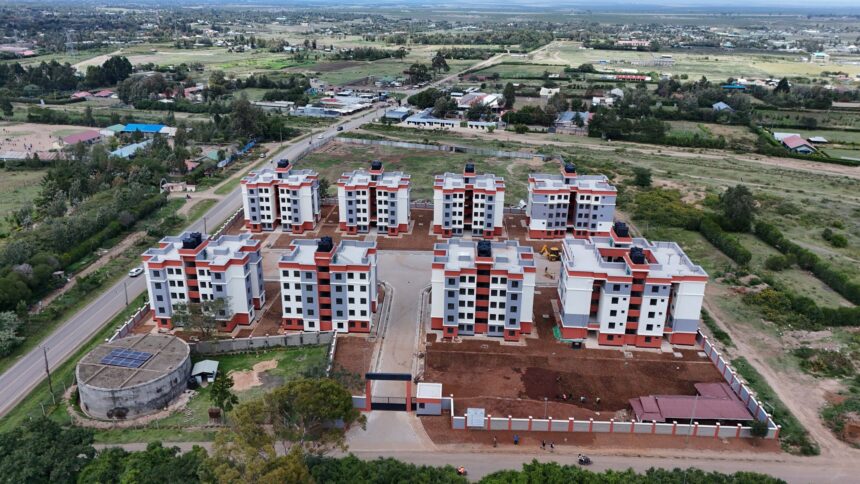
Kenya faces a persistent housing shortage, especially in fast growing urban areas. To address this, the government is banking on Shelter Afrique, a pan-African financial institution, to fund projects under the national Affordable Housing Programme (AHP). The institution is expected to provide the long-term financing needed to bridge the gap between limited public resources and the country’s growing housing demand.
The need for Shelter Afrique’s support arises partly because no developer has sought State backing to secure loans from local banks. The government sees the institution as a critical partner to mobilize investment and provide technical guidance for affordable housing projects.
Transforming Shelter Afrique Into a Development Bank
Earlier this year, the Cabinet ratified a plan to convert Shelter Afrique into a development bank, the Shelter Afrique Development Bank (SHAFDB). This move is expected to strengthen the institution’s access to international capital markets. It will also allow Kenya, as the largest shareholder, to leverage its position to fund housing projects and urban infrastructure development.
Currently, funding for the AHP has been on a “deal-by-deal” basis. Housing Principal Secretary Charles Hinga said discussions with Shelter Afrique are ongoing but in early stages. No specific projects have yet been financed through the development bank. The government also considered issuing off take guarantees to developers to secure local bank loans. However, no developer has taken up the offer so far.
The State continues to collect the Housing Levy 1.5% of monthly salaries from formal workers which brought in Sh73.2 billion in the 2024/25 fiscal year. While significant, this money primarily goes into infrastructure development, such as roads and sewerage services, rather than direct construction of housing units.
Affordable Housing Projects Across Kenya
Shelter Afrique has already supported several large-scale housing developments. One notable example is Riverview Estate in Athi River, which will deliver 1,074 housing units. Prices range from KSh 1.6 million to KSh 5 million, making them affordable to low- and middle-income households. Shelter Afrique provided KSh 540 million for the first phase of the project, part of a total investment of KSh 2.9 billion.
Other developments include housing estates in Nairobi, Mombasa, and Kiambu counties. These projects combine modern construction standards with flexible options for buyers, including self-completion models. This allows families to adapt projects to their financial capacity while promoting ownership and long-term stability.
Shelter Afrique also offers technical expertise. It advises on project design, procurement, and cost efficiency. By reducing construction costs and improving planning, the institution helps ensure homes are delivered on time and within budget.
Scaling Affordable Housing Finance
Recently, Shelter Afrique secured USD 120 million (around KSh 15.5 billion) from the Arab Bank for Economic Development in Africa (BADEA) to scale up its housing finance across the continent. These funds are intended for large-scale projects and on-lending to developers, expanding access to affordable housing for thousands of families.
The institution also promotes intra African trade in building materials and financial services. This strengthens regional supply chains while supporting economic growth. By linking capital with expertise and private sector participation, Shelter Afrique is creating a sustainable framework for affordable housing development in Kenya.
Challenges and Opportunities
Kenya’s reliance on Shelter Afrique highlights the complexity of delivering affordable housing. Projects must balance cost, quality, and speed of delivery. Developers require clear financing mechanisms, while the government must ensure infrastructure supports housing estates. Delays or lack of developer interest can slow progress.
Despite these challenges, Kenya’s partnership with Shelter Afrique provides a unique opportunity. The development bank model offers predictable funding, technical support, and regional collaboration. It also allows Kenya to leverage its position as the largest shareholder to attract more capital for long-term projects.
A Vision for Sustainable Housing
Shelter Afrique’s role extends beyond financing. It helps Kenya build a scalable housing ecosystem that empowers families to access secure and affordable homes. By combining capital, technical expertise, and policy support, the institution is set to enhance urban development while promoting economic inclusion.
With strategic planning, the government and Shelter Afrique can address the housing backlog. Thousands of households in Nairobi, Mombasa, Kiambu, and other counties could benefit from well-planned, affordable estates. The collaboration also demonstrates a new model for pan-African investment, where shared resources and expertise deliver tangible social impact.
Kenya’s affordable housing agenda depends on partnership, innovation, and access to finance. Shelter Afrique provides all three. With sustained effort, the country can bridge the housing gap, improve living standards, and offer a blueprint for housing solutions across Africa.