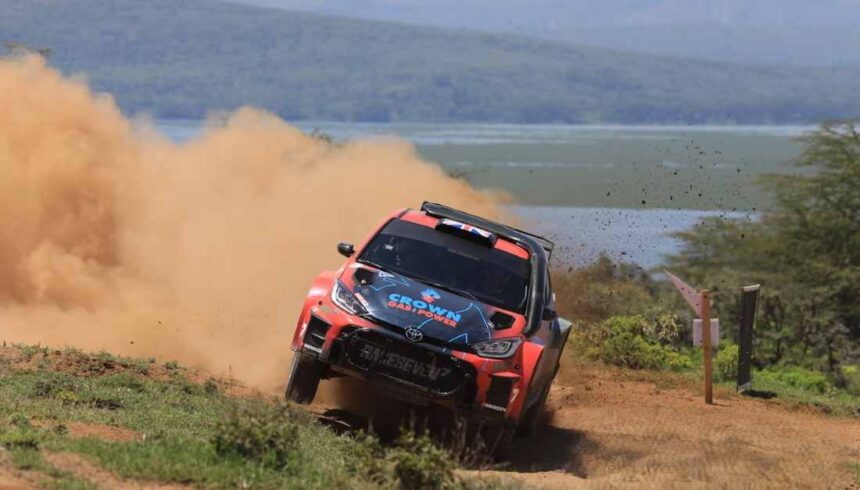
The Safari Rally has long stood as one of the toughest and most respected events in global rally racing. Its demanding terrain, unpredictable weather, and rugged landscapes test even the most experienced drivers. Over the years, the rally has become a symbol of endurance and skill within the World Rally Championship.
The Rally2 category has become one of the most competitive classes in the World Rally Championship, offering high-performance cars at lower costs, allowing private teams and national drivers to compete internationally. At the Safari Rally, Rally2 competition has grown steadily in importance.
The Safari Rally itself began in 1953 as the East African Coronation Safari, covering thousands of kilometres across Kenya, Uganda, and Tanzania, and gained a reputation for extreme endurance, including mud, gravel, river crossings, wildlife, and unpredictable weather. It joined the WRC calendar from 1973 to 2002 and returned in 2021, re-establishing Kenya as a key rally destination. Legendary winners include Shekhar Mehta (5 wins), Björn Waldegård (4 wins), Hannu Mikkola (3 wins), and Ian Duncan (1994, last Kenyan winner), with Sébastien Ogier claiming victories in the modern era. Manufacturers such as Toyota, Ford, Subaru, and Mitsubishi have all triumphed on Kenya’s challenging terrain. Today, Rally2 cars play a crucial role in the Safari Rally, providing a platform for emerging drivers to compete against seasoned international crews, often achieving top-ten finishes, and offering Kenyan teams a pathway to restore the country’s proud rally legacy.
Kenya’s Rally Heritage
Kenya has a long and proud history in rally racing. The country once dominated the Safari Rally during its early decades when local drivers understood the challenging terrain better than international competitors.
One of the most memorable victories came in 1994 when Ian Duncan won the Safari Rally driving a Toyota Celica GT4. That victory marked a historic moment for Kenyan motorsport and inspired many young drivers across the country. Another respected name from that era is Patrick Njiru, who delivered strong performances in the rally and helped demonstrate Kenya’s competitiveness on the international stage. These achievements helped establish Kenya as a key location in the global rally calendar. They also created a legacy that continues to motivate modern drivers.
Kenyan Drivers Target a Breakthrough
Several Kenyan rally drivers continue to pursue success in the Rally2 category. Among them, Karan Patel stands out as one of the most experienced competitors on the African rally circuit. Patel has achieved success in the African Rally Championship and has earned recognition for his speed on smooth and technical rally stages. Despite occasional setbacks in past Safari Rally editions, he remains determined to deliver a strong performance.
His partnership with experienced co-driver Tauseef Khan has also strengthened his campaign. Khan has competed in several international rally events and brings valuable experience to the team. Other Kenyan crews also share similar ambitions. Drivers such as Samman Vohra, Hamza Anwar, Virani Aakif, and Issa Amwari continue to build their reputations through consistent participation in regional rallies. Each season presents another opportunity for these competitors to prove their abilities against international drivers.
International Competition Raises the Stakes
The Safari Rally regularly attracts a strong lineup of global competitors. Many international drivers arrive with extensive experience and advanced rally machines designed for extreme conditions. One prominent competitor is British driver Gus Greensmith, who has previously secured victories in the Rally2 category. Greensmith has competed in several major rallies and remains one of the strongest challengers in the field.
Drivers from Europe and South America also bring significant experience to the event. Their presence ensures that competition remains intense and unpredictable. For Kenyan drivers, facing these seasoned competitors adds another level of challenge. However, local knowledge of the terrain often provides an important advantage.
The Unique Challenge of the Safari Rally
Few rally events in the world match the demanding nature of the Safari Rally. Drivers must navigate muddy tracks, rocky surfaces, and rapidly changing weather conditions. The rally often includes sections that test vehicle durability as much as driver skill. Mechanical reliability plays a crucial role, as breakdowns can quickly end a competitor’s race.
These conditions make the Safari Rally one of the most respected events in motorsport. Completing the rally itself is often considered an achievement. For Kenyan drivers, the event also offers a chance to compete in front of passionate home fans who closely follow the country’s rally tradition.
A Continuing Pursuit of Rally Glory
Kenya’s rally community remains hopeful that local drivers will once again rise to the top of the Safari Rally standings. The determination shown by the current generation reflects the country’s enduring passion for motorsport. Each rally season adds new chapters to Kenya’s long rally history. As drivers continue to refine their skills and build stronger teams, the possibility of another breakthrough result remains alive.
The Safari Rally continues to inspire drivers, mechanics, and fans alike. It represents both a challenge and an opportunity for Kenyan motorsport to shine on the global stage. For those chasing victory in the Rally2 category, the journey is about more than trophies. It is about honoring Kenya’s rally legacy while striving to write the next chapter in one of motorsport’s most demanding competitions.