Kenya’s political landscape may be heading toward another realignment. The Orange Democratic Movement (ODM) has taken a decisive step that suggests it could support President William Ruto’s re-election bid. The party has formally opened coalition talks with the ruling United Democratic Alliance, sending a strong signal ahead of the 2027 General Election.
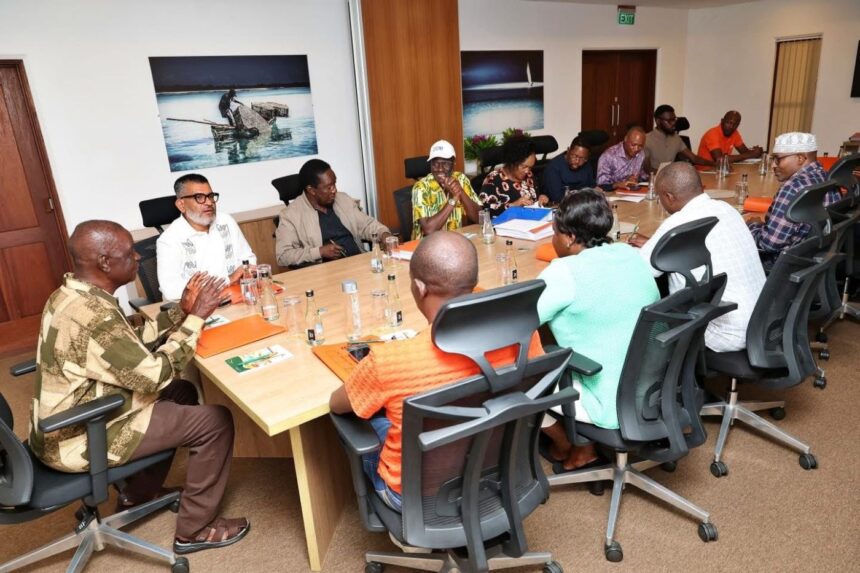
This move did not come through speculation or side remarks. It followed a long and intense meeting of ODM’s top decision-making organ. The party’s Central Management Committee met for more than six hours in Vipingo, Kilifi County. At the end of the meeting, the message was clear. ODM is ready to talk. The committee resolved that the party must begin structured negotiations with other political formations. The talks will start with UDA. ODM party leader Senator Oburu Oginga received the mandate to spearhead the process. His task is to engage potential partners and report back to the party.
Speaking after the meeting, Dr Oburu said ODM could not afford to delay preparations for the next election. He noted that elections are won long before the campaign period begins. According to the party, waiting until 2027 would be a strategic mistake. This decision marks the clearest indication yet of ODM’s possible direction. For years, the party has positioned itself as a leading opposition force. Now, it appears open to working with the current administration. For many supporters, the announcement represents a turning point.
Preparing Early for the Next Government
ODM leaders say the decision is about planning, not surrender. They argue that early preparation gives the party leverage. By opening talks now, ODM hopes to shape the agenda of the next government instead of reacting to events.
Dr Oburu said the party plans to carry out wide consultations with its members. These discussions will take place across the country. They will eventually lead to a National Delegates Convention. The convention will decide ODM’s final political position. The party also plans to strengthen its internal structures. Leaders want to sharpen policy proposals and build organisational capacity. They aim to prepare candidates early and avoid last-minute confusion. Coalition building will play a central role in this strategy.
ODM leaders insist that any alliance must reflect the party’s political weight. They say ODM will not accept a symbolic role. Instead, the party wants a negotiated arrangement that addresses long-standing political grievances.
Three weeks before the meeting, Dr Oburu hinted that ODM would declare its position on President Ruto’s re-election by mid-2026. He said the party would not wait until the election year to make such a critical decision. That statement now appears to be part of a broader plan. Several senior ODM leaders have openly supported the broad-based government in recent months. Their remarks have fueled speculation that the party is warming up to President Ruto. Supporters of the move say the political environment has changed and ODM must adapt.
They argue that the opposition lacks the numbers to win power on its own. In their view, collaboration offers a chance to influence policy and protect supporters’ interests. For them, pragmatism matters more than rigid political positions.
Internal Resistance and Party Tensions
Despite the leadership’s position, the move has exposed deep divisions within ODM. A section of senior officials has openly opposed any alliance with UDA. They fear the party could lose its identity and credibility.
Secretary-General Edwin Sifuna, Deputy Party Leader Godfrey Osotsi, and Siaya Governor James Orengo have voiced strong reservations. They argue that ODM risks being absorbed into the ruling coalition. According to them, the party should remain independent. Their absence from the Kilifi meeting raised eyebrows. Both Senators Sifuna and Osotsi are members of the Central Management Committee. Their non-attendance fueled claims of a boycott. Party leaders dismissed the claims.
Dr Oburu said the two leaders had sent apologies. He explained that Senator Sifuna missed his flight. Senator Osotsi, he said, was on official duty in South Africa. Still, the explanation did little to calm tensions. Senator Osotsi later questioned the urgency of the meeting. He said he had requested a postponement to allow full attendance. According to him, the request was ignored. His remarks highlighted growing unease within the party.
Behind the scenes, the meeting was tense. Sharp exchanges dominated discussions about ODM’s future. Sources say there were proposals to discipline leaders opposing talks with UDA. These proposals were later dropped.
Some committee members warned that suspensions would worsen divisions. They argued that punishing dissent would weaken the party. In the end, the committee adopted a compromise position. ODM would open talks with UDA and other political players. ODM National Treasurer Timothy Bosire denied claims of planned suspensions. He dismissed the reports as political propaganda. He insisted that no member proposed disciplinary action against dissenting leaders. However, events after the meeting suggested otherwise. Pro–broad-based government MPs held a press conference in Nairobi’s Karen area. They openly criticized Senator Sifuna and asked him to resign if he opposed the party line.
A Defining Moment for ODM’s Future
Several ODM lawmakers have rallied behind the decision to open talks. They say unity is more important than internal disagreements. According to them, the party must move with the political tide.
Homa Bay Town MP Peter Kaluma urged Senator Sifuna to respect party decisions. He said ODM leaders must stand with the party or step aside. Uriri MP Mark Nyamita echoed the call for urgency. He said time was running out before the next election. Alego Usonga MP Sam Atandi accused Senator Sifuna of undermining fellow party members. He warned that internal attacks weaken ODM. Atandi called on members to support the Central Committee’s resolution.
Makadara MP George Aladwa said ODM is ready for a pre-election agreement. He stressed that negotiations must respect party resolutions and ensure fair sharing of resources. Dagoretti North MP Beatrice Elachi thanked the leadership for providing direction. Deputy Party Leader Simba Arati said supporting President Ruto’s re-election may be ODM’s most viable option. He argued that the opposition lacks the strength to defeat a broad based alliance. In his view, ODM must act strategically.
As talks begin, ODM faces a defining test. The party must balance pragmatism with principle. It must manage internal dissent without tearing itself apart. The decisions made now will shape its relevance for years.
For supporters, the moment brings both hope and uncertainty. Some see opportunity in cooperation. Others fear betrayal of long held ideals. What remains clear is that ODM is no longer standing still. The road to 2027 has already begun. ODM has chosen to walk it early. Whether that path leads to unity or deeper division will soon become clear.