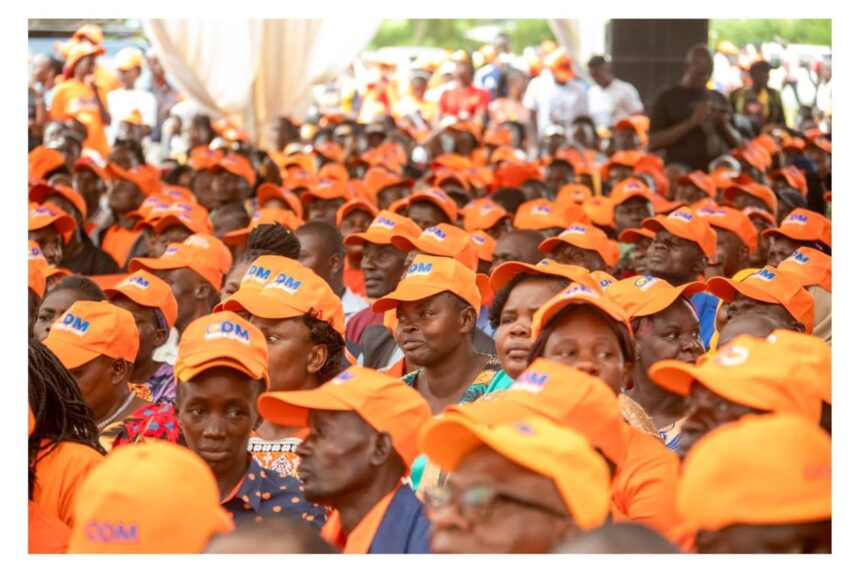
On Sunday, January 18, 2026, the Orange Democratic Movement (ODM) held two major rallies in different parts of the country. One took place at Kamukunji Grounds in Kibra, Nairobi. The other unfolded in Kakamega County under the “Linda Ground” mobilisation drive.
On the surface, both gatherings aimed to energise supporters ahead of the 2027 general election. In reality, they revealed something deeper and more troubling: a party grappling with parallel power, unresolved leadership disputes, and an uncertain future after the death of its long-time leader, Raila Odinga.
These rallies did not project unity. They exposed contrast. One relied on symbolism and legacy. The other focused on structures and control. Together, they offered a snapshot of a party struggling to speak with one voice.
Kamukunji: Legacy Politics and the Struggle for Moral Authority
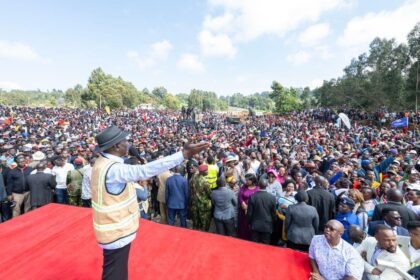
At Kamukunji Grounds, Winnie Odinga and Raila Odinga Jr. led a charged rally steeped in emotion and symbolism. Supporters chanted Raila Odinga’s name and praised his role in Kenya’s opposition politics. The setting itself carried weight. Kamukunji has long served as a symbolic ground for dissent, resistance, and ODM mobilisation.
Winnie Odinga used the platform to call for unity within the party. She warned against expelling members and criticised leaders she accused of exploiting Raila Odinga’s name for personal gain. Her message centred on ownership of legacy. She framed the party’s internal conflict as a moral struggle between those who genuinely believed in Raila’s vision and those who merely used his popularity.
The speech resonated with loyal supporters. But it also highlighted a growing weakness within ODM. Legacy politics, while powerful, does not replace strategy. The rally focused heavily on who deserves to speak for Raila’s memory, yet offered little clarity on policy direction, party reform, or electoral strategy.
By leaning heavily on symbolism, the Kamukunji rally reinforced a perception that ODM remains emotionally anchored to its past. The party drew strength from history, but it avoided difficult questions about leadership structure, authority, and decision-making in Raila’s absence. That silence matters.
Kakamega: Grassroots Mobilisation or Parallel Power?
While Nairobi focused on legacy, Kakamega County told a very different story. Under the ODM “Linda Ground” initiative, the party held mobilisation rallies and delegates’ meetings across Kakamega Town and Mabole. The stated goal was simple: strengthen grassroots structures and consolidate support in Western Kenya.
What emerged instead was parallel power in action.
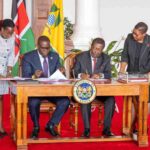
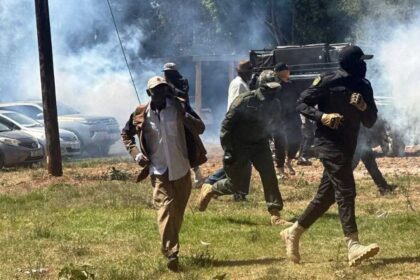
Rival ODM factions organised separate gatherings. Competing leaders mobilised different groups of delegates. Each side claimed legitimacy. The duplication was so visible that ODM Party Leader Oburu Odinga moved between rival forums in an effort to calm tensions and project unity.
These divisions stem from disputed county party elections and unresolved leadership rivalries. They are not new. But the decision to allow parallel meetings on the same day exposed the party’s inability to enforce internal discipline. It also raised questions about who truly controls ODM at the county level.
Grassroots mobilisation matters. But when mobilisation happens in fragments, it weakens the party. The Kakamega events showed that ODM’s structures exist, but authority over them remains contested. In political terms, that is dangerous.
Instead of building momentum, the rallies risked legitimising factionalism. They sent a signal that influence within ODM now flows through personal networks rather than clear institutional channels.
Two Rallies, Two Messages, One Party Problem
Viewed together, the Kamukunji and Kakamega rallies exposed ODM’s core challenge: a lack of coherence.
In Nairobi, the party leaned on emotion and history. In Kakamega, it leaned on numbers and organisation. Neither rally articulated a shared national vision. Neither clearly defined who speaks for the party or how decisions are made.
This is the essence of parallel power. Authority becomes dispersed. Loyalty shifts from institutions to individuals. Messaging becomes inconsistent. Over time, voters lose confidence.
The contrast also reflects a deeper identity struggle. Is ODM a movement built around legacy and resistance? Or is it an institution preparing for governance and coalition politics? The rallies offered different answers, and that contradiction remains unresolved.
Internal debates over cooperation with the ruling coalition further complicate matters. Without consensus, ODM risks appearing opportunistic rather than principled. A party that cannot agree internally struggles to negotiate externally.
Why This Moment Matters for ODM’s Future
These rallies were not isolated events. They were signals.
They showed that ODM still commands crowds. But crowds alone do not win elections. Organisation, clarity, and unity do. The Kamukunji rally proved the emotional pull of Raila Odinga’s legacy remains strong. The Kakamega gatherings proved the party still has a grassroots footprint. What remains missing is a unifying centre of authority.
If parallel power persists, ODM risks repeating a familiar Kenyan political pattern. Parties built around strong personalities often struggle after those figures exit the stage. Without deliberate institutional rebuilding, internal competition replaces collective purpose.
The coming months will test whether ODM can confront these realities. The party must decide whether unity will be symbolic or structural. It must choose between managing factions or reforming systems. It must move beyond rallies and address leadership, rules, and direction.
For now, the message from today is clear. ODM is active. ODM is visible. But ODM is unsettled. Until it resolves its internal contradictions, every rally will raise the same question: who truly leads, and in whose name?