Kenya’s foreign policy continues to adapt as global power dynamics shift. The return of Donald Trump to the White House changed Washington’s approach to Africa. His “America First” agenda halted several aid programmes and reversed policies from the previous administration. Kenya felt the impact immediately. Ambassador Meg Whitman resigned shortly after the 2024 US election. Key policymakers in Washington also questioned Kenya’s growing ties with China.
In May 2024, the US Senate’s Foreign Relations Committee expressed concern about Kenya’s relationship with Beijing. The committee chair highlighted Kenya’s alignment with China despite its status as a major non-NATO ally. His remarks put Kenya’s strategic designation under scrutiny. They also cast doubt on agreements made during President Ruto’s earlier state visit to the United States.
Despite this skepticism, the US remained attentive to China’s influence in Africa. This cautious approach eventually softened. A planned visit to Kenya by Vice President JD Vance indicated a renewed interest from Washington. However, the trip was cancelled after the US boycotted the G20 Summit in South Africa. Regional conflicts in eastern Congo and Sudan further compelled Washington to re-engage, especially as President Trump sought to demonstrate his diplomatic capabilities.
Regional Peace Efforts
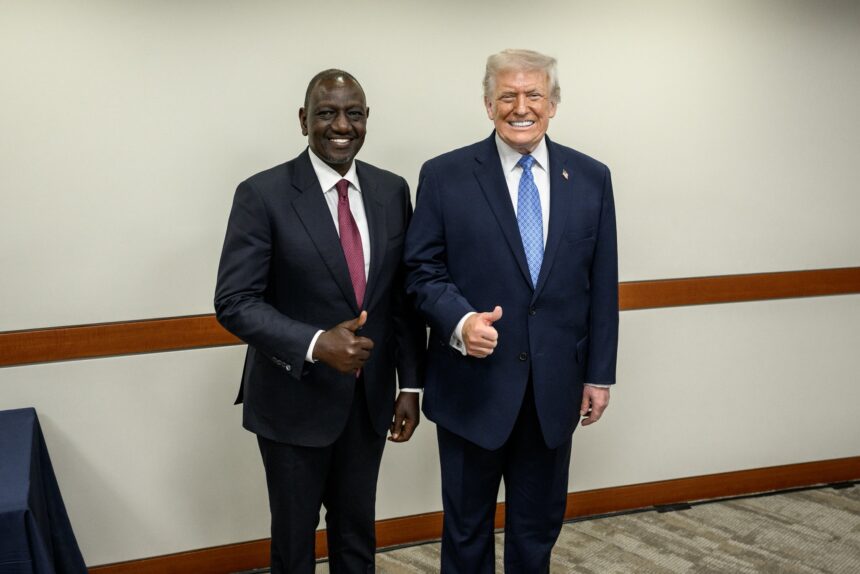
This shift created opportunities for Kenya. On December 5, President Ruto attended a peace agreement signing in Washington between the Democratic Republic of Congo and Rwanda. The event offered him a platform to showcase his Pan-African vision. It also allowed him to strengthen Kenya’s ties with the US. President Trump underscored America’s commercial and strategic interests in the region.
The signing of the Health Cooperation Framework between Kenya and the Government of the United States
During the visit, Kenya and the US signed the Health Cooperation Framework. This agreement replaced previous aid structures. It set clear rules for collaboration on health issues. Kenya agreed to share disease data and provide samples when required. In return, Washington pledged $1.6 billion in aid over the next five years.
The pact marked a significant milestone in Kenya-US relations. It restored Kenya’s standing with the Trump administration and enhanced President Ruto’s diplomatic influence. Yet challenges persist. Relations with the DRC remain delicate. Kenya faces questions about its role in regional peacekeeping and past military interventions. Despite this, Ruto used the Washington stage to highlight the Congo’s economic and strategic importance. He emphasized that a peaceful eastern DRC could unlock vast regional opportunities.
Kenya’s current position illustrates the broader challenge facing African nations. They must balance relations with Western powers while managing growing Chinese influence. President Ruto’s strategy demonstrates a combination of ambition and adaptability. By leveraging international opportunities and addressing regional challenges, he has maintained Kenya’s relevance on the global stage.
As Africa’s global role evolves, leaders like Ruto show that careful diplomacy can advance national and regional interests. Kenya’s experience underscores the need for strategic engagement, clear communication, and an ability to adapt to changing international dynamics. Balancing multiple global partnerships remains essential for Africa’s economic growth and stability.
Also read: Funding pressures in Kenya’s education, health and security sector