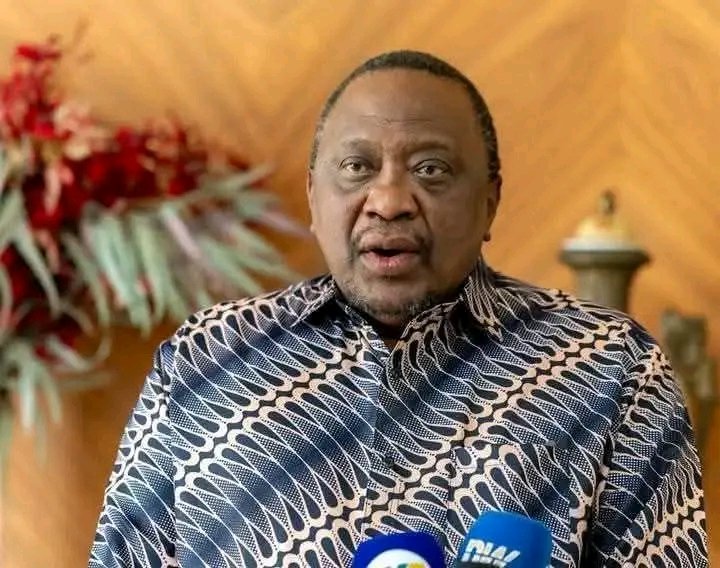
Democracies assume that public discourse belongs to all citizens, not just those in office. Leaders elected to serve eventually step down, but they do not lose their right to participate in civic life. In many systems, retired presidents, prime ministers, and senior officials continue to engage in debate, offer advice, and critique policy. This participation can strengthen democratic culture if done responsibly. It can also create tension when current leaders feel criticised or unsettled.
Kenya’s recent political dynamics illustrate this reality. Former heads of state, particularly former President Uhuru Kenyatta, have remained visibly engaged in national conversations after leaving office. His public statements and interventions have become flashpoints in broader debates about the role of retired leaders in shaping the national agenda.
The Right to Speak After Office
Former leaders occupy a unique space in public life. They are private citizens, yet their voices carry weight because of their experience and historical role. In Kenya, retired leaders like Uhuru Kenyatta have continued to address national audiences on matters ranging from internal party conduct to national unity. At public events, he has warned political actors against divisive language and urged respect for democratic norms, emphasising that insults and personal attacks erode public trust and weaken social cohesion.
Kenya’s political culture has seen repeated moments when retired leaders speak on issues of national interest. In the years following his presidency, Kenyatta has addressed young people on leadership, responsibility, and economic self-reliance. He has also challenged African leaders to reduce dependency on external support and invest more in home-grown solutions. These interventions reflect a broader concern about governance, development, and the long-term direction of the country and the continent.
Defenders of such engagement argue that retirement from office does not erase political perspective. Former presidents can offer continuity, historical insight, and moral reasoning. They can help bridge generational divides by drawing on long experience. From this view, vibrant democracies tolerate and even value these voices, provided they respect existing institutions and constitutional order.
When Engagement Becomes Controversial
Public commentary from retired leaders often attracts criticism, especially when it is interpreted as intruding into active political contests. In Kenya, some leaders and political actors have pushed back against remarks made by former President Kenyatta. Critics have argued that he should give space to incumbents and avoid public statements that could be perceived as undermining those currently in power.
These reactions reflect a broader tension. When a retired leader comments on governance issues, opponents may frame the intervention as interference or as an attempt to influence political outcomes. In recent years, accusations emerged that Kenyatta was influencing internal dynamics within other political parties, particularly opposition formations. Some party leaders publicly rebuked him, warning that external engagement could destabilise internal cohesion and party autonomy.
The former president responded by dismissing the claims outright. According to his position, the accusations were driven by political motives rather than evidence. He framed his continued public engagement as a commitment to national unity and democratic stability, arguing that leaving office does not require retreating from civic responsibility when institutional respect and democratic values are under threat.
These exchanges show how democratic debate can quickly become personal and polarised. Even in systems with constitutional protections for free expression, interpretation of speech often depends on political context and prevailing power dynamics.
Political Parties, Public Dialogue, and Responsibility
Public commentary from retired leaders often attracts criticism, particularly when it appears to intersect with active political contests. Within Kenya’s political space, remarks made by former President Uhuru Kenyatta have prompted pushback from some leaders and commentators. Concerns have arisen that retired leaders’ public statements may limit incumbents’ space to govern.
This reaction highlights a deeper tension within democratic systems. Commentary from former leaders is frequently reframed by opponents as interference or an attempt to shape political outcomes. In Kenya, claims have surfaced suggesting that Kenyatta sought to influence internal affairs within other political parties, including opposition groups. Several party figures warned that such involvement, whether real or perceived, could undermine party independence and internal cohesion.
The former president has consistently rejected these accusations. He has described them as politically driven narratives and maintained that his public engagement reflects a commitment to national unity and democratic stability. From this perspective, stepping away from office does not require withdrawal from civic responsibility, especially when fundamental democratic norms are under strain.
Such exchanges demonstrate how quickly public debate can turn personal and polarised. Legal protections for free expression may exist, but political context often shapes how speech is received. In environments marked by competition and high stakes, interpretation becomes inseparable from power dynamics, making democratic dialogue both essential and fragile
What Democracies Must Balance
The debate over the role of retired leaders is not unique to Kenya. Across the world, democracies grapple with similar questions. In many countries, former presidents and prime ministers continue to speak on public issues, endorse candidates, or critique policy. Their involvement often sparks debate about influence, authority, and the limits of political engagement after office.
At the heart of this issue lies a delicate balance between two democratic principles. Freedom of expression allows all citizens, including former leaders, to speak openly. Respect for current leadership ensures stability and institutional continuity. Too much silence weakens accountability. Too much rhetoric risks destabilising governance.
When former leaders offer criticism, it should be distinguished from attempts to undermine democratic processes. Healthy democracies depend on robust dialogue that respects institutional boundaries. Current leaders, in turn, benefit from tolerance toward critique, especially when it is responsible and anchored in the national interest.
Political maturity also requires recognising the informal role retired leaders can play as custodians of institutional memory. Their experiences can help contextualise present challenges and remind society of past lessons. At the same time, their influence should not overshadow the mandate of elected leaders, who carry the responsibility of governing and responding to citizens’ needs.
A Democratic Test
Kenya’s ongoing debate over the role of former leaders reflects a broader democratic test. It examines how society balances respect for experience with respect for institutional authority and it also reveals how political actors respond to criticism, whether through engagement, dismissal, or confrontation. It also challenges citizens to think about participation beyond elections.
A healthy democracy allows voices from the past and present to coexist without fear. It values listening as much as speaking. It encourages criticism that improves policy rather than fuels personal attacks.
Retired leaders add depth to public discourse. They create space for reflection rather than reaction. Their engagement can strengthen democracy when it promotes unity, accountability, and respect for institutions.
Ultimately, democracy depends not on silencing disagreement, but on managing it with maturity. The challenge lies not in suppressing voices, but in guiding them toward constructive contribution. When political actors prioritise national interest over personal rivalry, democracy grows stronger.