Sacred spaces have long offered refuges for reflection, prayer, and moral guidance. In Kenya, churches, mosques, and temples serve as neutral grounds. They foster community, provide comfort, and instill a sense of security. Yet recent events show a troubling trend: politics steadily erodes the sanctity of these spaces.
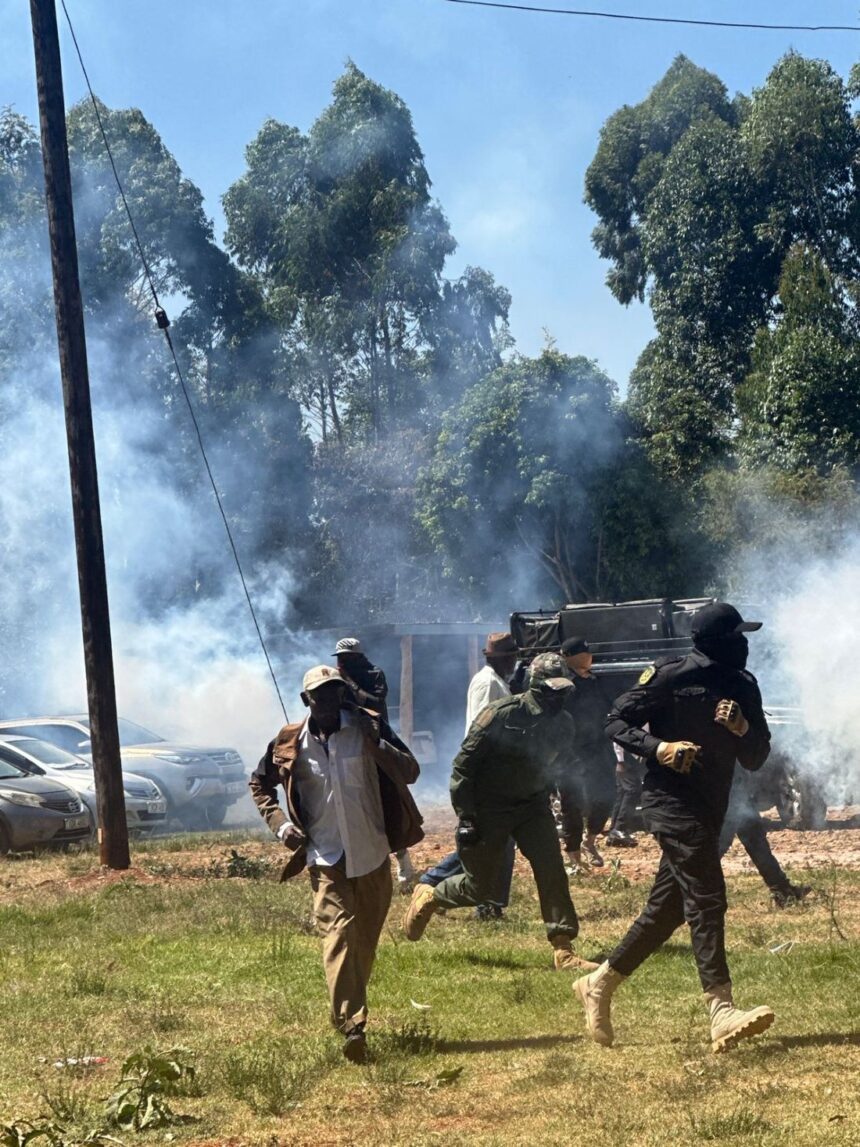
During a service at Witima ACK Church in Othaya, Nyeri County, attackers disrupted the congregation while former Deputy President Rigathi Gachagua attended. Tear gas drifted into the sanctuary, forcing worshippers to flee and choke on fumes. Attackers set ablaze vehicles in Gachagua’s convoy. Chaos replaced worship, and fear overtook the sanctuary. Gachagua and his team reported that intruders fired live rounds amid the commotion. Public calls for investigation quickly dominated debate.
A Pattern of Political Interference
The Othaya incident triggered reactions across Kenya’s civic and political spectrum. Wiper leader Kalonzo Musyoka condemned the disruption as a grave violation of the Constitution and the rule of law, highlighting that unarmed congregants faced danger inside a sacred space. The National Council of Churches of Kenya demanded accountability and public apologies, warning that violence against worshippers undermines institutions and erodes trust. Deputy President Kithure Kindiki criticised the use of force, noting that such acts weaken democratic practice. The Othaya attack is not unique. In April 2025, intruders disrupted a Sunday service at the Presbyterian Church of East Africa (PCEA) in Kasarani, Nairobi, attended by Gachagua. Gunshots rang out, and his security team restored order. Gachagua described the incident as interference with his right to worship and blamed political rivals.
In July 2025, police fired tear gas at a convoy of leaders allied with Gachagua after a church service in Murang’a County. Gunshots reportedly followed, and crowds panicked as the convoy, including Nyandarua Senator John Methu, retreated. In June 2019, Nakuru Town West MP Samuel Arama drew a gun during a church fundraiser dispute, prompting police intervention. Each incident shows how political tension can reach spaces historically considered neutral.
Consequences for Communities and Faith
These incidents reveal a larger pattern: political tension transforms places of worship into conflict zones. Across Kenya, spaces meant for peace now face disruption. Congregants who once sought spiritual guidance arrive cautiously. Religious leaders confront pressure, both subtle and direct, to align with political interests or remain silent.
Communities lose trust in sacred spaces. Children witness violence instead of values. Faith, once unifying, becomes a political tool rather than a refuge for reflection. Social cohesion weakens, leaving divisions that last generations. Religious institutions also suffer. Clergy struggle to guide followers while shielding them from political fallout. Fear dictates sermons, and silence replaces moral instruction. Politics begins to influence faith itself.
Civic life suffers too. Political violence in sacred spaces sends a wider message: no space remains immune. Citizens fear participation in public forums, politics, and community activities. Intimidation spreads, and as neutral spaces shrink, politics dominates daily life.
Protecting Sacred Spaces: A National Imperative
Kenya’s history offers lessons. During tense political periods, schools, marketplaces, and churches became flashpoints, and violence disrupted lives and communities. The state must safeguard these spaces because when institutions fail, citizens face danger and uncertainty. Security agencies must actively protect neutral grounds. Religious institutions must maintain independence from political pressure while ensuring worshippers’ safety. Communities must stay alert to emerging threats, and civil society must push for accountability and dialogue. Together, these efforts protect both people and principles.
Leaders must act decisively. Threats cannot remain ignored, and policies must prioritise human life over political convenience. Fear spreads quickly when action lags. Congregants alter routines, avoid discussions, and leaders self-censor. Communities begin to accept that sacred spaces no longer guarantee safety. Yet hope remains. Kenya has resilient communities, religious institutions, and civic groups. History shows that moral authority combined with proactive security preserves safe sacred spaces. These spaces shape society, teach values, model civility, and build trust. When politics intrudes, violence and intimidation replace dialogue, communities fracture, and youth grow up expecting fear. The nation loses moral and social capital. Citizens must demand that leaders enforce neutrality policies. Religious institutions must resist political pressure, and security agencies must act before crises occur. Communities must hold all stakeholders accountable. The Othaya, Kasarani, and Murang’a incidents serve as warnings that no institution remains immune without vigilance.
Safeguarding sacred spaces goes beyond security. It affirms values, human dignity, communal trust, and the right to worship without fear. When leaders preserve neutrality, the nation strengthens. Sacred spaces will remain essential to Kenya’s social fabric only if leaders, citizens, and religious institutions act together. Vigilance, foresight, and decisive action must guide decisions. Preserving these spaces tests the nation’s conscience, and Kenya must pass.