
In Kenya, many people describe the work of a teacher as a calling rooted in patience, service, and sacrifice. In some parts of the country, however, that calling has slowly turned into a dangerous assignment where educators live with fear every day. The killing of a teacher in a remote area goes beyond personal loss because it exposes a deeper national crisis involving safety, duty, and the limits of sacrifice.
Across conflict-prone regions, teachers continue reporting to work despite knowing their lives may be at risk. During the day, they stand before classrooms and teach children, yet at night some seek shelter in police stations, chiefs’ camps, or trenches. Many receive threats, report them to authorities, and request transfers, only to face instructions to endure hardship or resign. Over time, fear becomes normalised, and repeated warnings lose urgency until violence finally strikes. This reality forces Kenya to confront a painful question it can no longer avoid: how much risk should a teacher be expected to bear?
The Growing Danger of Teaching in Insecure Regions
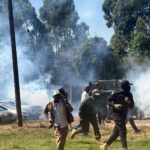
Insecurity has steadily reshaped the teaching profession in parts of northern and eastern Kenya, turning spaces meant for learning into zones of anxiety. Teachers now balance lesson plans with survival strategies as they operate under constant threat. In counties affected by extremist violence, educators quietly adjust their lives in extreme ways. Many avoid predictable routines, travel in groups, and abandon their houses at night to seek refuge in safer locations. Others sleep lightly with their phones close, ready to flee at the first sign of danger. These conditions have created an invisible group of working displaced persons. Teachers still enter classrooms every morning, yet their sense of home remains fractured. While the school bell signals learning for pupils, it also marks another day of survival for educators. Despite these risks, many teachers continue serving out of duty, financial responsibility, or lack of alternatives. Teaching salaries often support extended families, making resignation a difficult choice. For many, endurance becomes the only viable option even when danger clearly persists.
Non-Local Teachers and the Weight of Suspicion
Non-local teachers form the backbone of education in many marginalised regions where staffing shortages remain severe. They leave familiar environments to serve in difficult conditions, and their presence keeps schools open where learning would otherwise collapse. At the same time, being non-local exposes teachers to heightened risk. Their visibility makes them easier to single out, while their movements and interactions attract scrutiny. Efforts to integrate, such as learning the local language or building close community relationships, sometimes invite suspicion instead of trust.
In some areas, teachers who speak the local language fluently have faced accusations of being informants or undercover agents. Actions meant to foster belonging have instead increased danger, placing teachers at the centre of rumours and mistrust. When threats emerge, vulnerability deepens. Teachers begin living on constant alert as some receive direct warnings and others hear whispers of planned attacks. Fear slowly becomes part of the job description rather than an exception. Even then, authorities often treat transfer requests as routine administrative matters. Files move slowly, approvals delay action, and some head teachers decline to support applications. In extreme cases, teachers receive advice to resign if they feel unsafe. Such responses send a dangerous message by framing fear as a personal weakness rather than an institutional responsibility.
Garissa County and the Cost of Ignored Warnings
Garissa County illustrates how ignored warnings and delayed action can turn deadly. Over the years, teachers in the region have reported repeated threats, intimidation, and attacks that follow a disturbing and familiar pattern. In several cases, threats surfaced long before violence occurred. Attackers left messages behind, mentioned names, and promised to return. As one family member later recalled, “They wanted him to know they were watching. They promised they would come back.” Colleagues say teachers shared these threats among themselves and raised concerns locally, yet daily life continued as normal. Authorities held meetings and offered verbal assurances, but no immediate redeployment followed. Teachers who sought transfers describe a frustrating and slow process. Even after attacks or credible threats, relocation requests stalled. One relative recalled being told, “If you do not want to work, you should resign,” effectively turning safety into a negotiable privilege rather than a right.
Fear reshaped everyday routines. One teacher explained, “Whenever we received intelligence about an imminent attack, we would leave our houses at night.” Police stations and chiefs’ offices became sleeping places, while trenches turned into hiding spots. Non-local teachers faced particular danger. A colleague noted that a teacher’s fluency in Somali and close engagement with locals ironically increased suspicion, turning trust building into a fatal risk. After attacks, fear spread quickly across schools. Teachers openly declared they would not return, while others prepared to resign if redeployment failed to materialise. Union officials warned that continued inaction would cripple learning in the region. As one grieving family member put it, “The threats were real. They were reported. And eventually, they were fulfilled.”
Institutional Responsibility and a National Reckoning
Violence against teachers does not occur randomly. Armed groups understand that targeting educators destabilises communities by weakening schools that symbolise state presence, progress, and future opportunity. When teachers flee, education collapses, and communities become more vulnerable. One killing sends a message to dozens, allowing fear to travel faster than bullets. This strategy succeeds when state responses appear slow, fragmented, or purely reactive. The Teachers Service Commission maintains policies governing deployment and transfers, yet those policies must remain flexible when lives face imminent danger. A credible threat should trigger immediate review and decisive action, not prolonged deliberation. No teacher should beg, negotiate, or resign simply to stay alive.
Safety is not a reward for endurance. It is an obligation owed to every educator. While employing more local teachers may reduce some risks, it does not offer a complete solution. Local educators also face threats, and insecurity remains the core problem. The failure to act decisively on danger continues to cost lives. Protecting teachers requires coordination among education authorities, security agencies, county governments, and unions. It also demands listening carefully when teachers speak about fear and responding before tragedy strikes.
Kenya faces a serious risk of normalising death as an occupational hazard for teachers. Such thinking devalues lives, discourages talent, and deepens inequality as fewer educators volunteer for hardship postings. Education cannot thrive where institutions treat teachers as expendable. Every fallen teacher should force national reflection, not just condolences or investigations after death, but honest evaluation of systems that failed to act in time. The issue is not bravery, because teachers have already shown courage. The issue is responsibility. Protecting teachers affirms dignity and recognises a simple truth: no lesson plan, posting, or administrative delay is worth a human life. Until that principle guides decision-making, Kenya will continue mourning educators who should still be in classrooms, shaping the future instead of becoming casualties of neglect.