
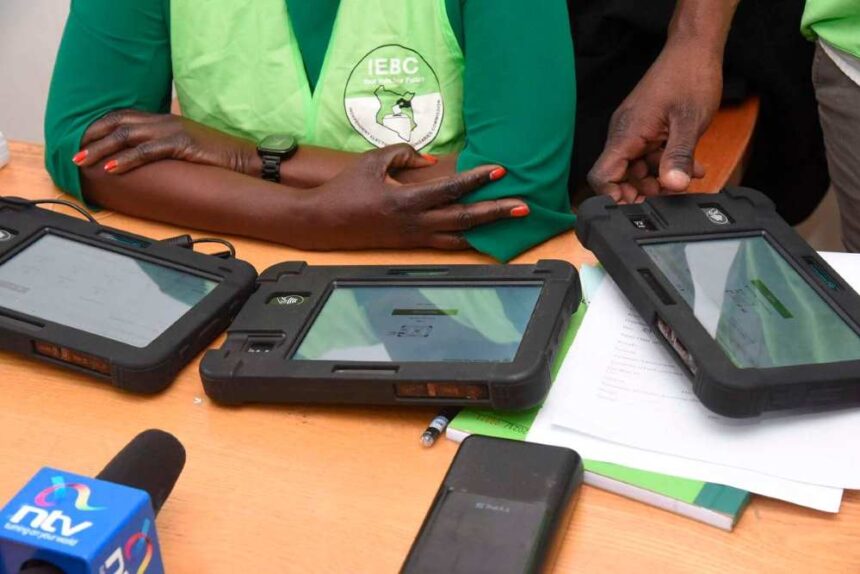
A major development has emerged within the Independent Electoral and Boundaries Commission (IEBC), raising fresh concerns ahead of the 2027 General Election. Millions of Kenyans who registered as voters before 2012 may be required to register afresh, in what analysts are calling a major electoral shift.
The commission clarified that the current biometric voter register came into effect in 2012. This followed key reforms after the 2010 Constitution. As a result, individuals who registered before that period are not included in the current biometric system unless they re-registered. IEBC chair Erastus Ethekon stated that affected voters must undergo fresh registration to participate in upcoming elections. The directive has sparked debate, as it could affect a significant number of voters across the country.
Millions Could Be Locked Out Without Fresh Registration
The move means that thousands, and potentially millions, of voters risk exclusion if they fail to re-register. The announcement comes as IEBC rolls out a nationwide Enhanced Continuous Voter Registration (ECVR) exercise. The drive started on March 30, 2026, and will run for 30 days.
Early data shows strong participation. Over 344,000 new voters registered within the first few days of the exercise. The commission also recorded thousands of voter transfers and updates. IEBC aims to register at least 2.5 million new voters during this window. However, broader projections show the commission targets up to 6.5 million additional voters before the 2027 polls. This aggressive push highlights the urgency of updating the voter register. It also reflects concerns about voter gaps in key regions and among young people.
Pressure Mounts Ahead of 2027 General Election
With about 17 months to the 2027 elections, IEBC is racing against time. The commission hopes to increase the total number of registered voters to nearly 28.5 million, up from about 22 million in previous records. The push has triggered political and public reactions. Critics warn that requiring fresh registration could disenfranchise older voters or those in remote areas. Others argue that the move is necessary to clean up the register and improve credibility. IEBC has defended the decision. Officials say biometric registration improves accuracy and prevents electoral fraud. They also insist that the process ensures every voter’s details are properly verified. At the same time, the commission is intensifying outreach. It is targeting youth, first-time voters, and underserved regions. Officials have urged citizens to register early, warning that there will be no extension after the April deadline.
This development marks a critical moment for Kenya’s electoral system. It highlights the ongoing transition toward more secure and technology-driven elections. However, it also exposes challenges in voter inclusion and public awareness. The requirement for fresh registration could reshape voter turnout patterns in 2027. Regions with low registration rates may face reduced participation if mobilization efforts fall short. For now, IEBC continues its nationwide campaign. The success of the exercise will depend on public response, logistical efficiency, and trust in the process. As Kenya prepares for the next general election, this “IEBC shocker” underscores one reality, the road to 2027 is already shaping up to be highly contested and closely watched.